Navigating June High Water: How to Catch Bow River Trout During Runoff
June on the Bow River is a test of patience, skill, and adaptability. While most anglers dream of gin-clear water and predictable hatches, the reality of early summer in southern Alberta is a river swollen with snowmelt, stained the color of chocolate milk, and pushing flows that can double or triple their baseflow levels in a matter of days. But here’s the thing most people get wrong: runoff season doesn’t mean the fishing shuts down.
The trout are still there, still eating, and often concentrated in predictable spots that a prepared angler can target with confidence. Catching Bow River trout during high water requires adjustments to your approach, your flies, your rigging, and your expectations, but the rewards can be surprisingly good. Some of the biggest brown trout of the year are caught during these turbid weeks, pushed out of the main current and feeding aggressively in the margins. If you’re willing to adapt, June can deliver some of the most memorable days you’ll have on any Alberta river.
Understanding June Runoff and Bow River Hydrology
The Bow River’s June personality is shaped by forces that begin thousands of meters above it. Snowpack in the Rocky Mountain headwaters, accumulated from October through May, begins its annual release as daytime temperatures consistently push above 10°C. This melt feeds tributaries like the Cascade, Spray, and Kananaskis rivers, each contributing to a surge that builds through late May and typically peaks between mid-June and early July. In 2026, with snowpack levels tracking near historical averages across the Bow basin, anglers should expect the classic pattern: a gradual rise starting in late May, a sustained peak through most of June, and a slow recession heading into July.
Rain events compound the picture. A warm June rain falling on an already-melting snowpack can spike flows dramatically within 24 hours. The Bow at Calgary can jump from 150 cubic meters per second to over 350 in a matter of days during these combined events. Understanding this hydrology isn’t academic: it directly determines where the fish will be and how you need to fish for them.
The Impact of Snowpack Melt and Rain on Water Clarity
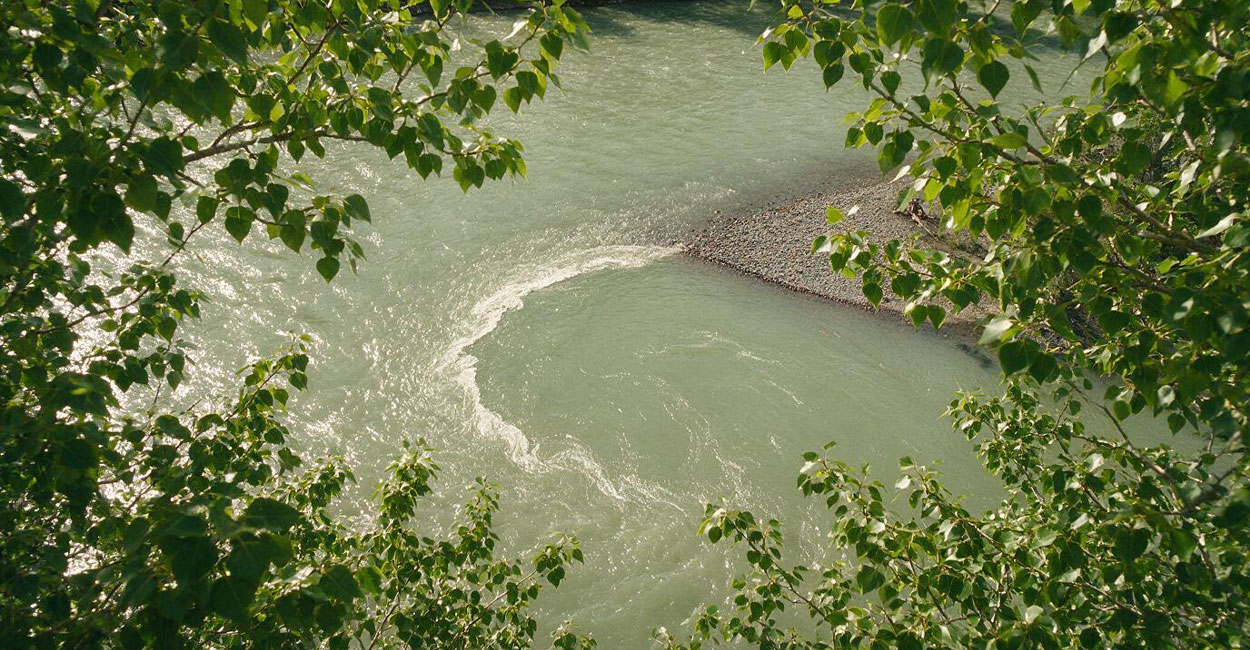
Water clarity during runoff is the single biggest factor affecting your fly selection and presentation. The Bow typically drops to less than 30 centimeters of visibility during peak runoff, meaning trout are relying heavily on lateral line detection and silhouette recognition rather than sight feeding. Glacial silt and suspended sediment from tributary drainages create a milky, grey-green turbidity that differs from the brown, organic stain you’d see after a localized rain event.
This distinction matters. Glacial turbidity tends to be finer and more persistent, meaning the river can stay off-color for weeks even after flows begin to drop. Rain-driven turbidity, by contrast, often clears within 48 to 72 hours. Checking the real-time hydrometric data from Water Survey of Canada stations at Cochrane and Calgary gives you a reliable picture of what you’ll encounter. When flows are dropping and clarity is improving, even by a few centimeters per day, fishing quality improves dramatically.
Identifying Safe Flow Rates for Wading and Boating
Safety is non-negotiable during high water. The Bow at flows above 250 cubic meters per second becomes extremely dangerous for wading anglers, and even experienced drift boat operators need to exercise serious caution above 300. At peak runoff, flows can exceed 400 cubic meters per second, and the river carries significant debris: logs, root balls, and other hazards that can appear with little warning.
For wading, stick to flows under 200 cubic meters per second, and even then, confine yourself to well-known shallow bars and bank edges where you can maintain solid footing. A wading staff isn’t optional during June: it’s essential. For drift boats, experienced rowers can safely operate at higher flows, but the margin for error shrinks considerably. Walk and wade trips become the smart choice during many June days, keeping you on stable ground while accessing productive bank water that boat anglers often blow past.
This is one reason guided walk and wade trips, like those offered by outfitters based near Calgary, are so effective during runoff: they put you exactly where the fish are without the risks of navigating heavy current from a boat.
Locating Trout in High-Volume Current
Finding trout in a blown-out river is fundamentally different from fishing during normal flows. The fish aren’t holding in their usual lies. The main current seams, riffles, and mid-river runs that produce so well in July and August are largely vacant during peak runoff because the energy cost of holding in that heavy flow exceeds the caloric benefit of any food drifting past. Trout are economic creatures. They relocate to spots where they can hold comfortably while still intercepting food, and these spots are overwhelmingly along the river’s margins.
Targeting the Soft Water Margins and River Banks
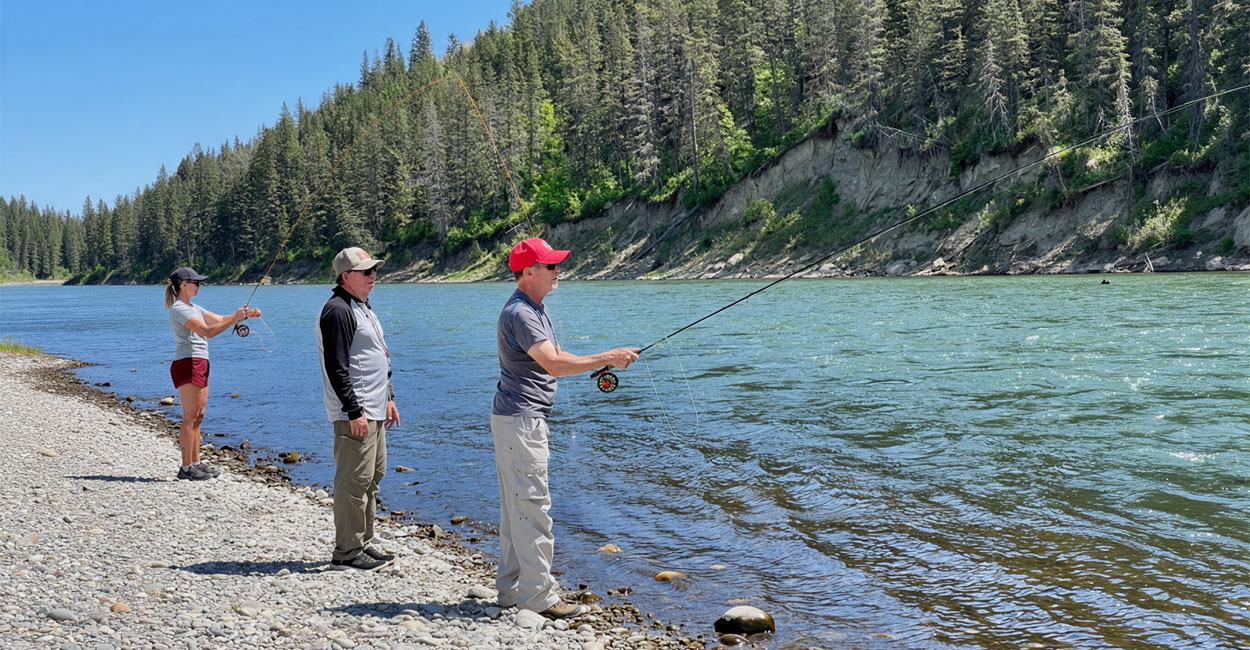
During high water, the first three meters of water along each bank become the most productive zone on the entire river. Trout stack up in the slow current created by bank friction, tucking behind rocks, root wads, and any structure that breaks the flow. Grassy undercut banks, which the Bow has in abundance, become prime holding water as the river pushes into vegetation that’s normally above the waterline.
Fish these margins methodically. Start tight to the bank and work outward, covering the water in strips. Many anglers make the mistake of casting too far into the current, dragging their flies through the productive zone too quickly. Keep your presentations close: sometimes the fish are literally within a rod length of the bank. Look for subtle current breaks, foam lines that track along the shore, and any spot where faster water meets a pocket of calm. Terrestrial insects get washed into the river along these edges, giving trout a reliable food source even when aquatic insect activity is suppressed by turbidity.
Finding Fish in Backeddies and Side Channels
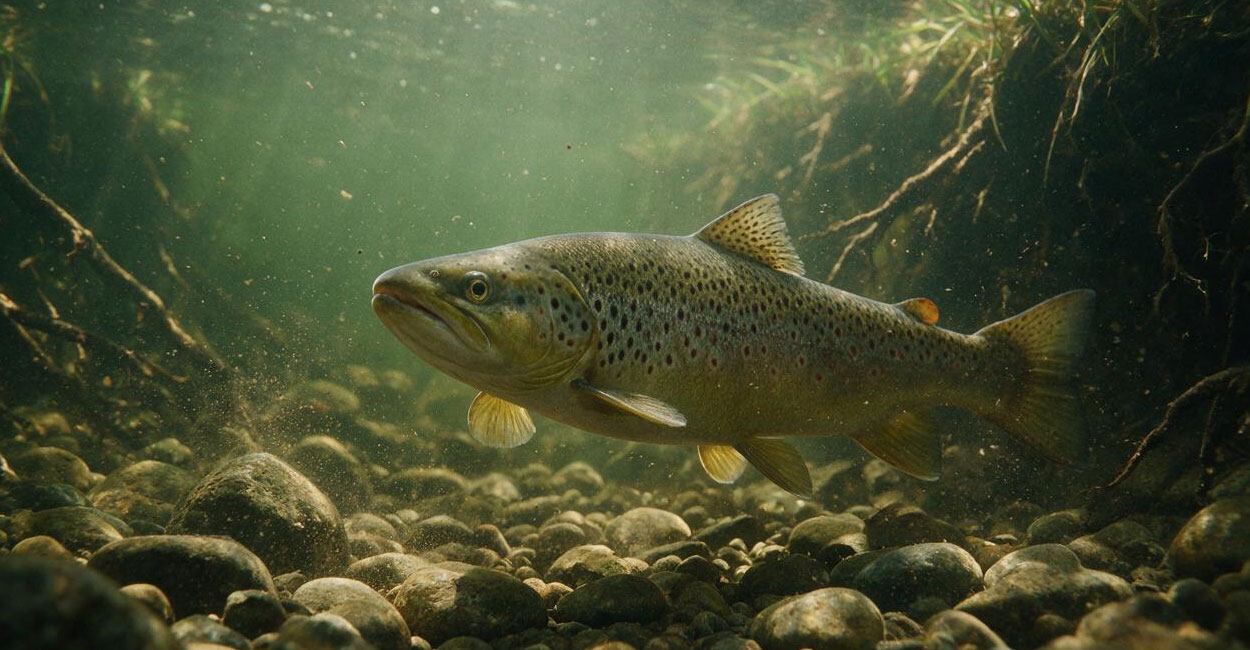
Backeddies are June gold. These recirculating pools form downstream of points, bridge abutments, and large boulders, and they collect both food and fish. During runoff, a single good backeddy can hold a dozen or more trout, all facing into the swirling current and picking off nymphs, worms, and debris. The key is reading the eddy’s current pattern: fish tend to hold along the seam where the eddy current meets the main flow, facing upstream into the recirculation.
Side channels deserve special attention during high water. Many of the Bow’s braided sections create secondary channels that carry a fraction of the main river’s flow. These channels often maintain better clarity because they’re fed by slower, filtered water. Fish push into these channels specifically to escape the heavy main current, and the reduced flow makes wading safer and presentations easier. If you know the Bow’s geography, you can identify these channels on satellite imagery before you even leave home. They’re worth the walk to reach.
Effective Fly Patterns and Rigging for Dirty Water
Your fly box for June runoff should look nothing like your summer dry fly collection. Visibility is the overriding concern: if the fish can’t see your fly or sense its movement, nothing else matters. This means bigger, darker, and flashier patterns across the board. Subtlety is for August. June demands flies that push water, throw a visible silhouette, and get down to where the trout are holding.
Sizing Up: Large Streamers and High-Visibility Nymphs
Streamers in sizes 2 through 6 are your primary search tool during heavy runoff. Patterns like woolly buggers in black or olive, Circus Peanuts, and Sex Dungeons in dark color combinations produce consistently because they create a large profile that trout can detect through turbid water. Add flash: a few strands of holographic tinsel or a flashy bead head makes a measurable difference when visibility is under 30 centimeters.
For nymph fishing, scale up to sizes 6 through 10. Rubber-legged stonefly patterns, large Prince Nymphs, and Pat’s Rubber Legs are all proven producers. The rubber legs create movement and vibration that trout can sense even when they can’t see the fly clearly. Use tungsten beadheads in black or copper to get weight and a visible flash point at the head of the fly. Hot spots of fluorescent orange or chartreuse on the thorax help with detection in murky conditions.
The Worm and Stonefly Strategy
If there’s a single most effective rig for Bow River runoff, it’s a large stonefly nymph trailed by a San Juan Worm. This combination works because it mimics exactly what’s happening in the river: stonefly nymphs get dislodged by heavy flows, and earthworms wash into the river from saturated banks. Trout gorge on both during June.
Run a size 6 or 8 Pat’s Rubber Legs as your point fly, with 30 to 40 centimeters of 3X or 4X fluorocarbon tippet dropping to a size 8 or 10 San Juan Worm in red or wine. The stonefly provides weight and acts as an attractor, while the worm trailing behind it picks up fish that follow the larger fly but commit to the smaller, more natural-looking trailer. This rig accounts for a disproportionate number of June trout, and it’s simple enough for anglers of any experience level to fish effectively.
Technical Adjustments for Heavy Flows
Standard nymphing setups that work beautifully during summer flows will fail you during runoff. The increased volume and velocity of the current demand modifications to your leader, weight, and presentation technique. Getting your flies into the strike zone, which during high water is often the bottom 15 centimeters of the water column, requires deliberate adjustments.
Using Sink Tips and Heavy Split Shot to Reach the Zone
For streamer fishing, a full floating line won’t cut it. Switch to a sink-tip line with a 10 to 15 foot sinking section rated at 4 to 6 inches per second. This gets your streamer down into the zone quickly, especially when casting into deeper bank pockets and backeddies. If you don’t own a dedicated sink-tip, a poly leader in extra-fast sink is a reasonable substitute that you can loop onto your floating line.
For nymphing, weight is everything. Use enough split shot to tick the bottom consistently: typically two or three BB-sized shot placed 20 to 30 centimeters above your point fly. Set your indicator at roughly 1.5 times the water depth. If you’re fishing a bank slot that’s a meter deep, your indicator should be about 1.5 meters above your lowest fly. Don’t be afraid to add weight until you’re occasionally snagging bottom: that’s how you know you’re in the zone. Losing a few flies to the rocks is the cost of doing business in June.
Short-Leash Nymphing Techniques for Tight Quarters
Euro-style nymphing and tight-line techniques shine during runoff because they give you direct contact with your flies and allow precise control in the tight quarters where fish are holding. With a 10 or 11 foot nymph rod, you can high-stick through bank pockets, undercuts, and eddy seams while maintaining a tight connection that lets you feel subtle takes.
Keep your leader simple: a section of 20-pound butt material, a sighter section of bi-colored monofilament, and a tippet section of 4X fluorocarbon. Total leader length should be roughly 1.5 times your rod length. Lead your flies downstream with the rod tip, maintaining just enough tension to feel the bottom and detect strikes. In dirty water, trout often take aggressively, so the strikes aren’t always subtle, but the direct connection of tight-line nymphing ensures you detect even the softer grabs that an indicator rig might miss.
Safety Protocols and Essential High-Water Gear
June’s high water demands respect. Every year, anglers underestimate the power of the Bow during runoff, and the consequences range from lost gear to genuine danger. A few non-negotiable rules will keep you safe and fishing. Wear a wading belt cinched tight at all times: it prevents your waders from filling with water if you go down. Carry a wading staff and actually use it, planting it before each step in any water above your knees. Check current advisories, fish with a partner whenever possible, and let someone know your plan and expected return time. A whistle attached to your vest is a simple safety measure that could save your life.
Your gear list for June should include studded wading boots for grip on algae-slicked rocks, a rain jacket regardless of the forecast, polarized glasses with amber or copper lenses that improve contrast in turbid water, and a landing net with a rubber bag for quick, fish-friendly releases. Speaking of releases: during high water, trout are already stressed by elevated flows and reduced oxygen in warmer, sediment-heavy water. Keep fish in the water as much as possible, wet your hands before handling, support them horizontally, and limit photo time to under 10 seconds. These fish need every advantage you can give them.
High-Water Alternatives: Back-Up Rivers Near Calgary
If the Bow is running too high or too dirty for your comfort level, consider nearby alternatives. The Sheep River, roughly 45 minutes south of Calgary, holds populations of brown trout, rainbow trout, and bull trout in a smaller, more wadeable setting. The Highwood River, about 90 minutes southwest, offers excellent cutthroat and bull trout fishing and often clears faster than the Bow due to its smaller watershed. The Oldman River system, roughly two hours south near Lethbridge, provides outstanding brown and rainbow trout fishing and frequently runs clearer during peak Bow runoff because its tributaries drain different terrain. Each of these rivers offers quality walk and wade fishing that can save a trip when the Bow isn’t cooperating.
Making the Most of Runoff Season
June high water on the Bow isn’t a reason to stay home: it’s a reason to sharpen your skills and fish smarter. The trout are concentrated, often feeding aggressively, and the crowds thin out because most anglers wait for the postcard conditions of late summer. By targeting soft water margins, fishing big flies on heavy rigs, and respecting the river’s power, you can turn what many consider the worst month on the Bow into some of your best fishing.
If you want to accelerate your learning curve and fish with someone who knows exactly where the trout hold during every stage of runoff, consider booking a guided trip with Bow River Fly Fishing. Their walk and wade packages are perfectly suited for June conditions, putting you on productive water with expert instruction tailored to your skill level. Book your trip today and experience what the Bow has to offer, even when it’s running high and dirty.