Common Fly Fishing Mistakes Beginners Make on the Bow River (And How to Fix Them)

The Bow River has a reputation for humbling even experienced anglers. Its crystal-clear waters, technical currents, and wary trout population create a learning curve that catches many newcomers off guard. I’ve watched countless beginners make the same preventable errors on this legendary Alberta fishery, mistakes that turn a promising day into an exercise in frustration.

The good news? Most common fly fishing mistakes beginners make on the Bow River stem from a handful of correctable habits. Understanding why these errors matter on this specific waterway makes all the difference. The Bow isn’t forgiving of sloppy technique, but it rewards anglers who take time to learn its rhythms. Wild rainbow and brown trout averaging 16 to 20 inches demand precision, patience, and proper preparation.

What follows represents hard-won knowledge from years of guiding and fishing these waters. When you’re trying to figure out why the Bow keeps defeating you, these fixes will transform your success rate. The river’s reputation as one of North America’s premier trout fisheries exists for good reason, and with the right approach, you can experience what makes it so special.

Mastering the Drift: Overcoming Poor Line Management

Line management separates successful Bow River anglers from those who spend more time untangling than fishing. The river’s complex currents create multiple speed zones within a single cast, and your fly line responds to every one of them. Poor line control means your fly behaves unnaturally, and trout notice immediately.

The fundamental problem most beginners face involves allowing too much slack to accumulate while simultaneously fighting drag they didn’t anticipate. This creates a lose-lose situation where you can’t set the hook effectively and your presentation looks nothing like natural food drifting downstream.

Correcting Constant Drag on the Bow’s Fast Currents

Drag occurs when faster or slower currents pull your fly line and leader, causing your fly to move across the current rather than with it. On the Bow, this happens constantly because the river features dramatic speed variations between main channels, seams, and slower edges.

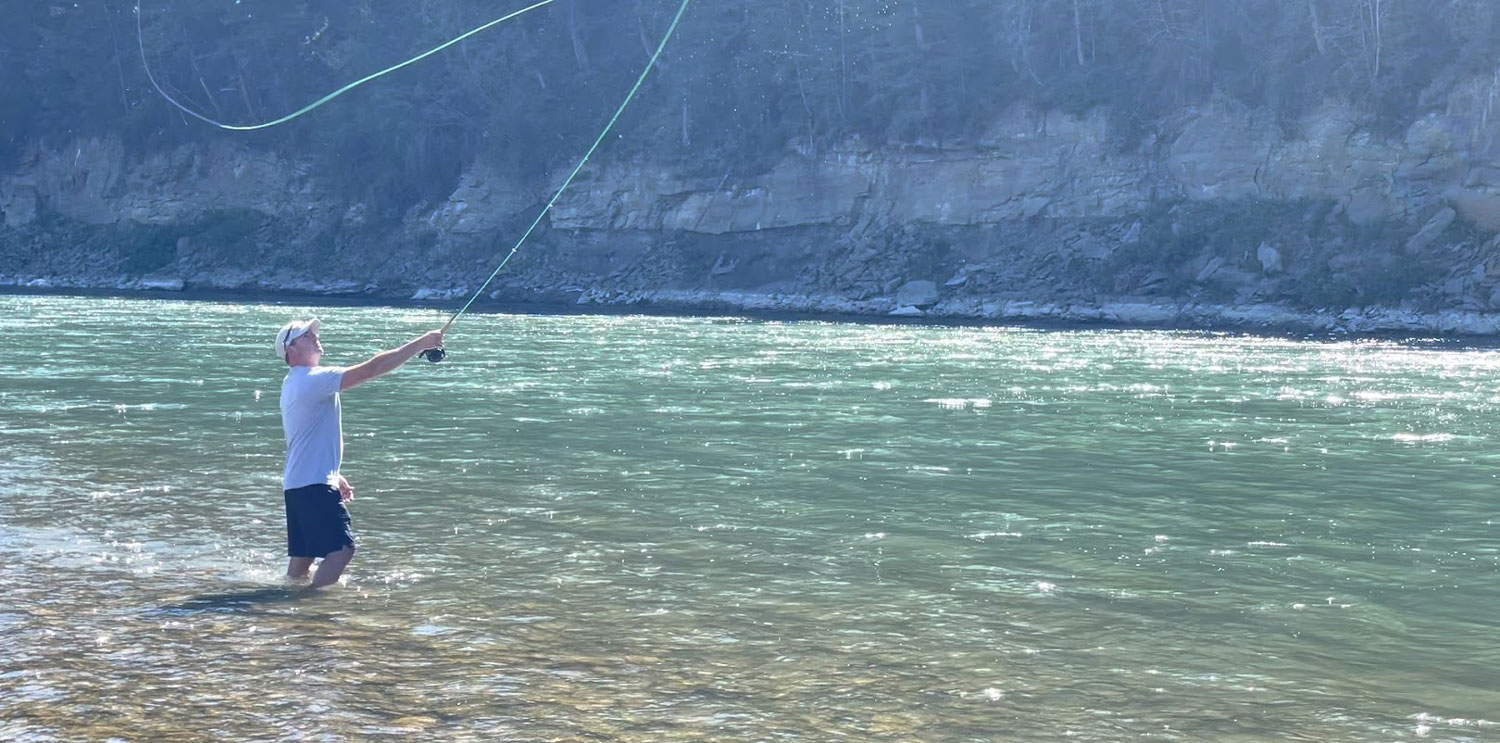
The fix requires repositioning your body and adjusting your casting angle. Instead of casting directly across fast water to reach a target, wade to a position where you can present your fly with minimal line crossing conflicting currents. Shorter casts with better angles outperform long casts that cross multiple current speeds every time.

Reach casts help tremendously here. By reaching your rod tip upstream or downstream during the cast, you place your line in a position that delays drag. Practice this technique on slower water before attempting it during your Bow River trip.

The Importance of Mending Upstream Early

Mending after drag has already started is like closing the barn door after the horse escapes. The key involves mending immediately after your fly lands, before the current has time to create problems. An upstream mend repositions your line so the fly continues drifting naturally.

Watch your indicator or dry fly closely during the first three seconds after landing. If you see any unnatural movement, mend again. On the Bow’s faster runs, you might mend three or four times during a single drift. This feels excessive at first, but it becomes automatic with practice.

Stack mending works well in particularly challenging spots. Instead of one large mend, make several small upstream mends in quick succession. This keeps your fly in the strike zone longer without the violent line movement that can spook nearby fish.
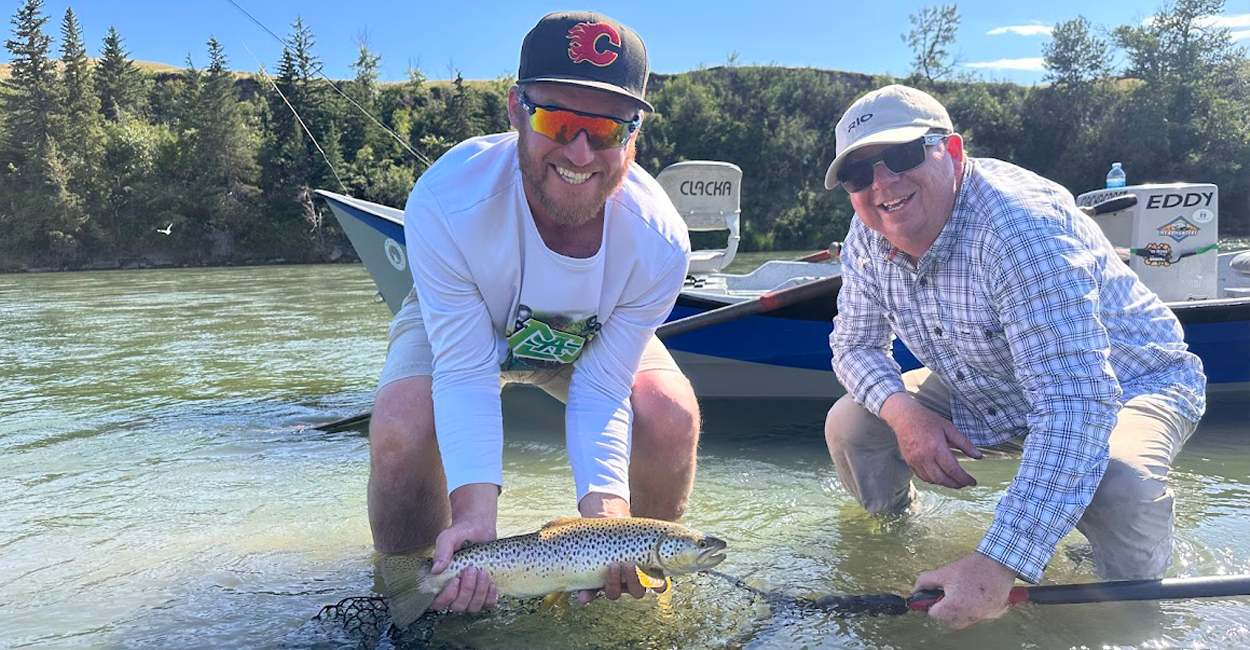
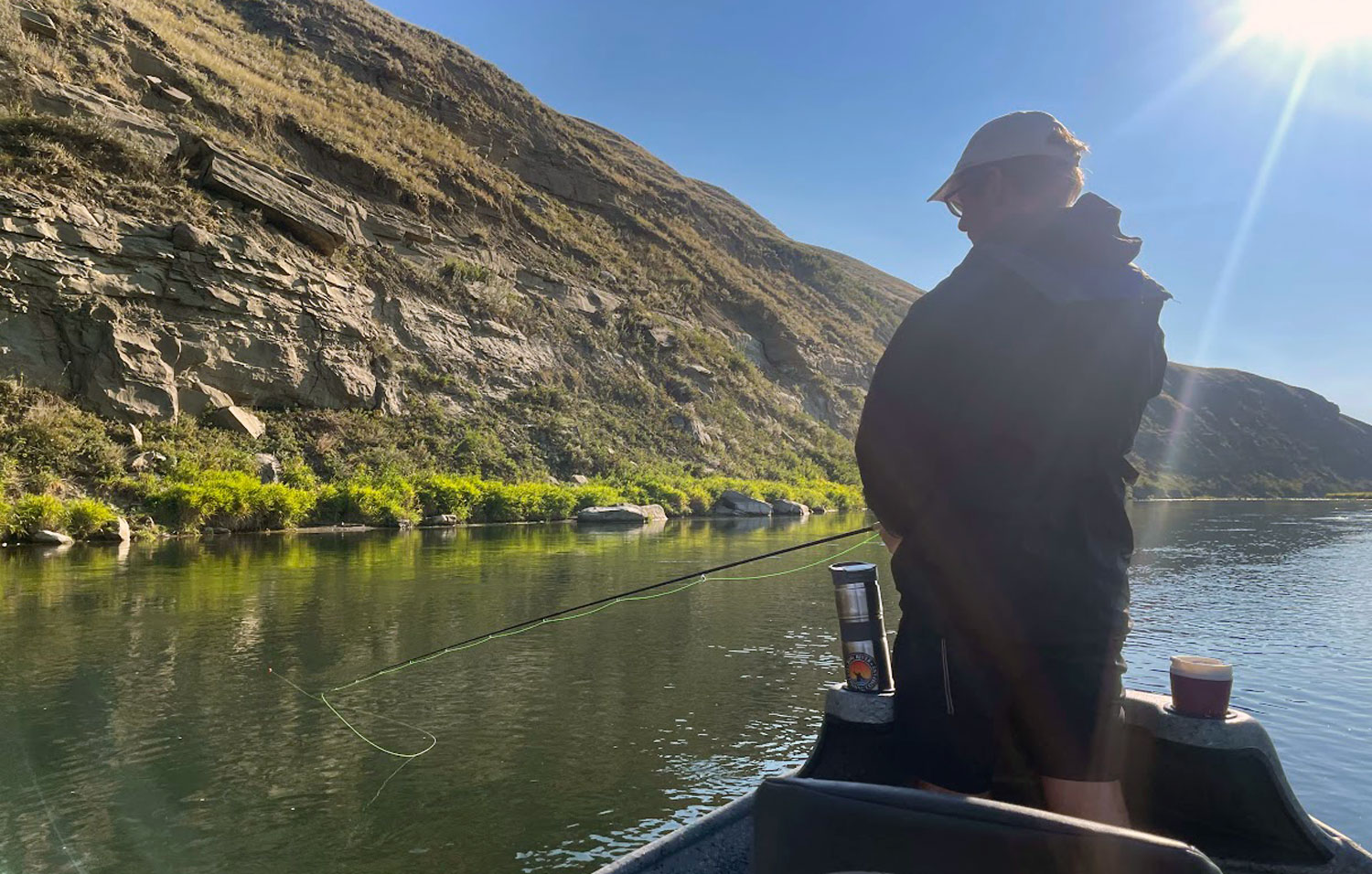
drift boat fly fishing in calgary alberta

Rigging Failures and Depth Miscalculations

The Bow River ranges from shallow riffles barely covering your ankles to pools exceeding ten feet. Fishing the same rig everywhere guarantees you’ll miss fish in most water types. Beginners often stick with one setup because changing feels complicated, but this single habit costs more fish than almost any other mistake.

Trout hold at specific depths based on water temperature, food availability, and current speed. Your flies need to reach those depths quickly and stay there throughout the drift. Getting this wrong means your presentation passes harmlessly above feeding fish.

Adjusting Indicators for Deep Pools and Fast Riffles

The general rule suggests setting your indicator at 1.5 times the water depth, but the Bow’s varying current speeds require constant adjustment. In fast water, you need more distance between indicator and flies because the current pushes your rig toward the surface. Slow pools allow closer spacing.

Many beginners set their indicator once and never touch it again. Successful Bow River anglers adjust every time they move to new water. Carry a small tool for quick indicator repositioning, and don’t hesitate to make changes mid-session.

Indicator size matters too. Large, buoyant indicators suspend heavy nymph rigs but create more surface disturbance. In clear, calm water, downsize to a smaller indicator even if it occasionally submerges. The tradeoff between visibility and stealth favors subtlety on pressured water.

Choosing the Right Weight and Split Shot Placement

Split shot placement affects drift quality more than most anglers realize. Weight positioned too close to your flies creates an unnatural sinking motion. Placed too far up the leader, it fails to get your patterns into the feeding zone.

For most Bow River nymphing, position your primary weight 8 to 12 inches above your point fly. This allows the flies to drift slightly behind and below the weight, mimicking how natural insects tumble along the bottom. In extremely fast water, add a smaller shot closer to the flies for faster sink rates.

Tungsten beadhead flies reduce the need for external weight while maintaining a more natural profile. Consider using heavier flies in your point position and lighter patterns as droppers. This creates a natural-looking presentation while achieving the necessary depth.

walk and wade fly fishing bow river

Approach and Stealth Near the Riverbank

The Bow’s clarity works against impatient anglers. Trout can spot movement from remarkable distances, and once spooked, they stop feeding for extended periods. Many beginners walk right up to the water’s edge, announce their presence to every fish within fifty feet, and then wonder why nothing bites.

Your approach begins long before you make your first cast. Parking location, walking path, and wading technique all influence whether fish remain calm and feeding or scatter to deeper water.

Avoiding ‘Spooking’ Large Rainbows in the Shallows

The Bow’s large rainbows frequently feed in surprisingly shallow water, especially during morning and evening hours. These fish feel vulnerable and remain hyperalert to threats. Your silhouette against the sky, shadows crossing the water, and vibrations from heavy footsteps all trigger flight responses.

Approach from downstream whenever possible. Fish face into the current, so approaching from behind keeps you in their blind spot. Stay low, move slowly, and avoid sudden movements. If you spot a feeding fish, stop immediately and plan your cast before moving closer.

Wade carefully and quietly. Each step should be deliberate, with your foot placed gently rather than splashing down. The gravel bottom transmits vibrations surprisingly well, and experienced trout associate those vibrations with danger.

Misreading Bow River Water and Trout Lies

Understanding where trout hold transforms random casting into targeted fishing. Beginners often focus on the most visually appealing water while ignoring subtle features that actually concentrate fish. The Bow offers countless holding spots, but learning to identify the best ones dramatically improves efficiency.

Trout balance three needs: food access, protection from current, and safety from predators. The best lies provide all three. Learning to read water means identifying where these factors converge.

Identifying Seams, Foam Lines, and Tailouts

Seams form where fast and slow water meet, creating a conveyor belt of food along a comfortable current speed. These edges often appear as visible lines on the surface where water textures change. Fish the slow side of seams, casting your fly into the fast water and letting it drift into the feeding zone.

Foam lines indicate where surface currents converge, concentrating floating insects and debris. The old saying “foam is home” holds true on the Bow. Follow foam lines with your eyes and you’ll often spot rising fish or identify prime holding water.

Tailouts deserve more attention than most beginners give them. These gradually shallowing areas at the bottom of pools offer excellent feeding opportunities, especially during hatches. Trout feel relatively safe in the deeper water behind them while accessing food drifting through the shallows. The Sheep River, located about 45 minutes south of Calgary, offers similar tailout structures on a smaller scale, making it excellent practice water for reading these features.
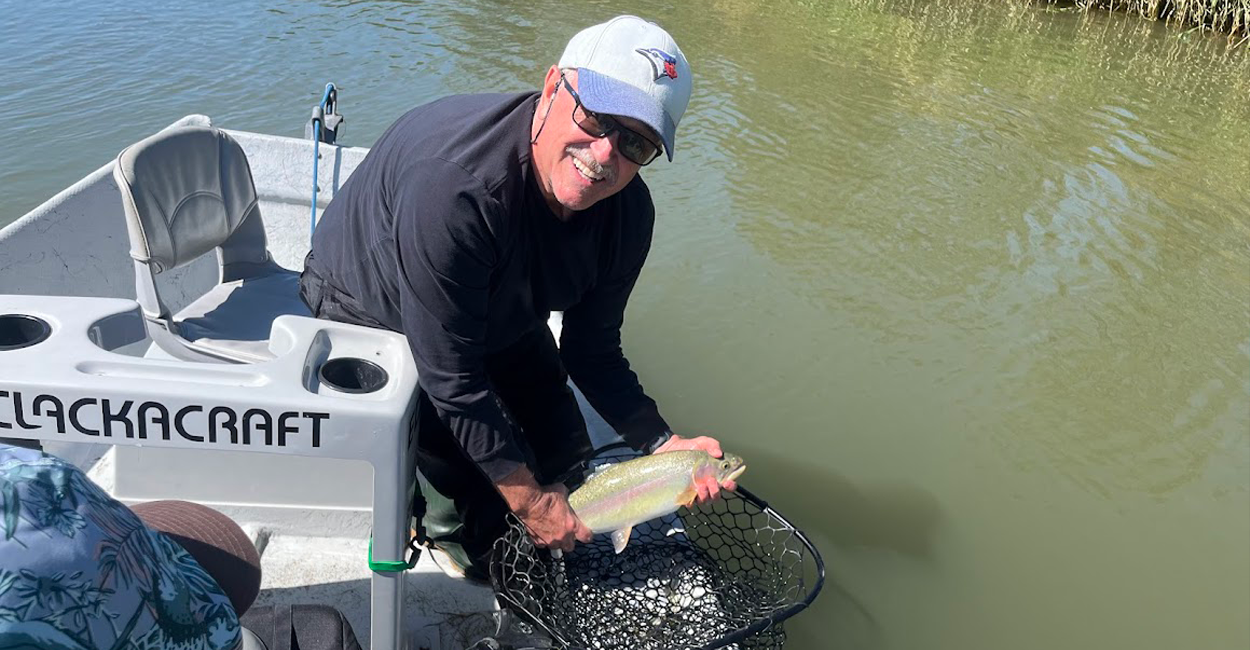
bow river fly fishing lessons

Inadequate Gear Preparation and Fly Selection

Showing up to the Bow River with the wrong flies or inappropriate tackle creates unnecessary handicaps. This fishery demands specific patterns matched to local insect populations and equipment capable of handling powerful, hard-fighting trout. Preparation before your trip determines much of your success.

Matching Local Hatches: Stoneflies, Caddis, and Hoppers

The Bow’s insect calendar differs from other trout rivers, and local patterns consistently outperform generic alternatives. Golden stoneflies emerge in late June and July, creating explosive surface action. Caddis hatches occur throughout summer, with peak activity during evening hours. Terrestrial patterns, particularly hoppers and beetles, become essential from July through September.

Carry nymph patterns in multiple sizes for each major insect group. San Juan Worms, Pat’s Rubber Legs, and various pheasant tail variations cover most subsurface situations. For dry fly fishing, stock Stimulators, Elk Hair Caddis, and foam hoppers in sizes 8 through 14.

The Highwood River, approximately 90 minutes southwest of Calgary, shares many insect species with the Bow but sees less pressure. Fishing there helps you learn local hatch patterns without the competition found on the main river. Cutthroat and bull trout in the Highwood respond to similar fly selections.

The Necessity of Strong Tippet for Hard-Fighting Wild Trout

Bow River trout fight harder than their hatchery counterparts elsewhere. These wild fish make powerful runs, use current to their advantage, and test every connection in your system. Beginners often lose trophy fish to tippet failures that stronger material would have prevented.

Use 2x-4x fluorocarbon for most nymphing situations depending on your fly sizes. The fluorocarbon’s abrasion resistance and lower visibility justify its higher cost. For dry fly fishing in clear conditions, you may need 4x or 5x  again, depending on your bug sizes. We use nylon tippet for dry flies but you can use fluorocarbon without any issues. Don’t go lighter than necessary. A 20-inch rainbow will break even 2x tippet if you can’t control the fight.

Check your tippet frequently for wind knots and abrasion. Replace any section that shows damage. The Oldman River, about two hours south near Lethbridge, offers similarly powerful brown and rainbow trout that provide excellent practice managing strong fish on appropriate tippet.

Improper Fish Handling and Catch-and-Release Ethics

The Bow River’s world-class fishery exists because of strict catch-and-release regulations and proper fish handling. Every angler shares responsibility for protecting this resource. Poor handling practices kill fish that appear to swim away healthy, gradually degrading the population that makes this river special.

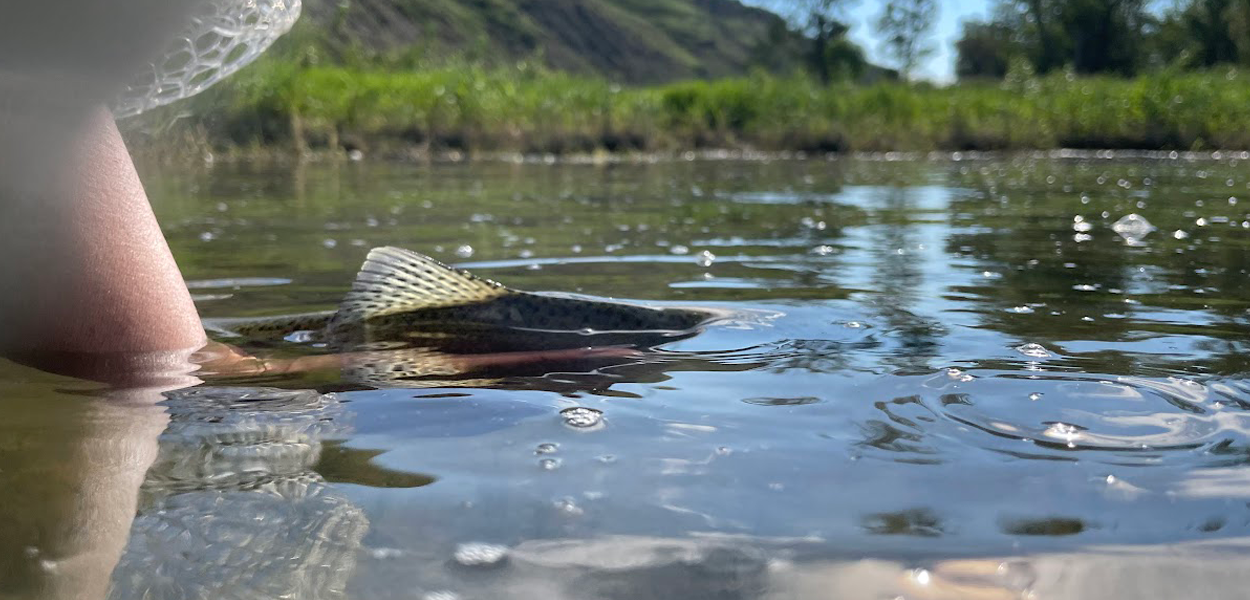
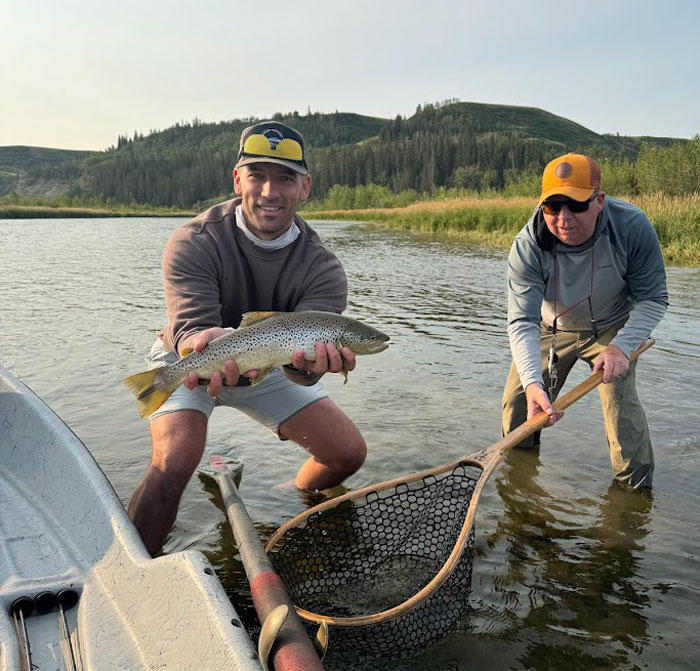
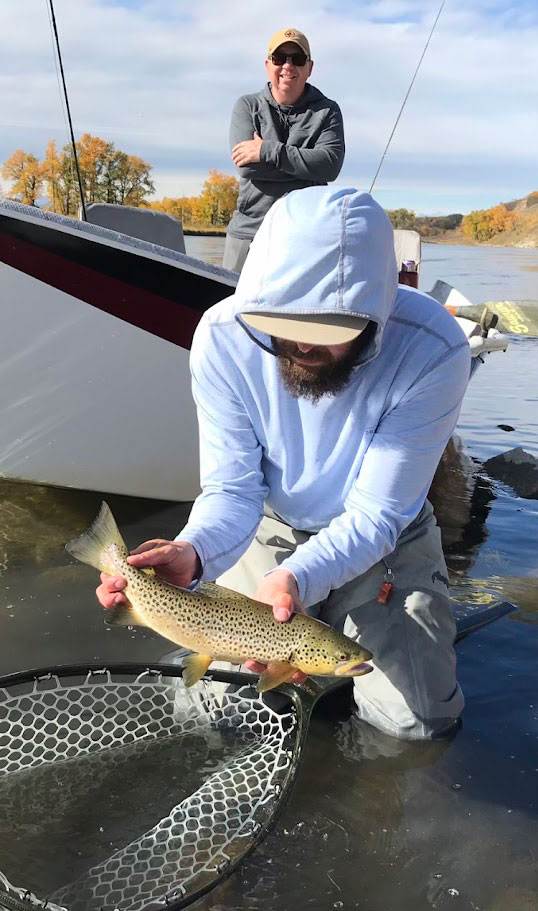
Keep fish in the water as much as possible. Wet your hands before touching any trout, as dry hands remove protective slime coating. Support the fish horizontally, never squeezing or holding vertically by the jaw. If you want a photo, have your camera ready before lifting the fish, and return it to the water within ten seconds.

Revive exhausted fish by holding them upright in gentle current, allowing water to flow through their gills. Wait until the fish kicks strongly before releasing. If a fish won’t recover, continue holding it and move to slightly faster water for increased oxygen flow.

Bow River Fly Fishing offers guided trips and lessons tailored to all skill levels, helping you avoid these common mistakes while experiencing the best water near Calgary. Book your trip and discover why anglers travel from around the world to fish these waters.

Preparing for Bow River Fly Fishing Season: What to Expect from April Through Fall

The Bow River doesn’t care about your schedule. It runs on its own clock, dictated by snowmelt, insect hatches, and water temperatures that shift dramatically from April’s first tentative warmth through fall’s golden afternoons. Understanding this rhythm separates frustrated anglers from those who consistently find fish.

Preparing for Bow River fly fishing season means accepting that what works brilliantly in June will fail spectacularly in August. The river transforms itself multiple times between spring and fall, and the trout adapt accordingly. A productive day in early April looks nothing like a productive day during the summer caddis blizzards or the aggressive brown trout activity of October.

We’ve watched visiting anglers show up with the wrong flies, wrong tactics, and wrong expectations because they treated the Bow as a static fishery. It isn’t. The river near Calgary hosts one of North America’s hardest fighting wild fish populations, but accessing those fish requires matching your approach to the season. Rainbow and brown trout exceeding 20 inches cruise these waters, but they won’t cooperate with anglers who ignore seasonal patterns, or who are not willing to adapt to conditions.

What follows breaks down each phase of the Bow River season, from the pre-runoff window through autumn’s streamer fishing. We’ll get you moving in the right direction here and you’ll know what to expect from April through fall, which flies to carry, and how to fish them effectively. With all seasons on the river there are windows into what should be happening vs what is actually happening on the water. Be versatile and observant out there and you’ll find success. 

Early Season Awakening: Fishing the April Pre-Runoff Window

April on the Bow River offers something rare: eager trout that haven’t seen an angler in months, combined with predictable insect activity. The window is narrow, typically lasting from ice-off through mid-May, but anglers who hit it right experience some of the year’s most consistent fishing.

Water temperatures hover in the low 40s to upper 40s Fahrenheit, cold enough that fish remain somewhat lethargic but warm enough to trigger feeding. The key is timing your outings around the warmest part of the day, usually between 11 AM and 3 PM when insect activity peaks.

The Midge and BWO Emergence

Midges dominate the early season menu. These tiny insects hatch in staggering numbers, and trout key on them when nothing else is available. Size 18-22 patterns in black, gray, and olive cover most situations. Look for fish rising in slower water along banks and in back eddies where midges concentrate.

Blue Winged Olives join the party as April progresses. These mayflies prefer overcast, drizzly conditions, so don’t stay home when the weather turns gray. Sizes 16-20 in olive and gray work well. Fish them dead-drift through rising fish, and don’t be afraid to downsize your tippet to 5X or 6X.

  • Carry midge clusters and emerger patterns alongside single adults
  • Griffiths Gnats, Adams, Parachute BWO, Foam Back Emergers are some go to patterns.
  • Focus on water between 2-4 feet deep with moderate current
  • Watch for subtle rise forms that indicate subsurface feeding

The Bow sees a Skwala Stonefly have in early spring along with the BWO emergence. Sometime in late March through April these size 8-12 stones will be on the menu as water temps rise. Dedicated Skwala patterns or Chubby Chernobyls fished tight to the banks are a great temptation for large trout. The nymphs under an indicator or as a dropper include a TJ Hooker, Jimmy Legs or even a large Prince Nymph. 

Targeting Overwintering Rainbows and Browns

Trout that survived winter are hungry but not aggressive. They’ve positioned themselves in lies that offer food delivery with minimal energy expenditure. Deep runs, tailouts, and inside bends hold concentrations of fish.

Nymphing produces more consistent results than dry fly fishing during early season. San Juan Worms, Pheasant Tails, and small stonefly patterns fished near the bottom account for most fish. Indicator nymphing at depths of 4-6 feet covers productive water efficiently. Remember to slow down  your presentation. The water is still cold and trout just can’t move very fast yet. 

Browns tend to hold tighter to structure than rainbows during this period. Target them near submerged logs, undercut banks, and large boulders where they can ambush prey without expending much energy.


As water temps warm up in May we are lucky to enjoy the Mothers Day Caddis hatch. This is our first Caddis emergence and we’ll see trout happily feeding on the dries and the emergers, often next to structure on the current edges. Elk Hair Caddis, X Caddis, Tied Down Caddis and Lawson’s Caddis Emergers will get the job done. Nymphs include a Pheasant Tail, Brown or Olive Hare’s Ear’s or dark bodied Perdigon pattern. Sizes 14-18 are common and don’t be afraid to tie an emerger to the back of your dry fly so you can detect subtle takes.


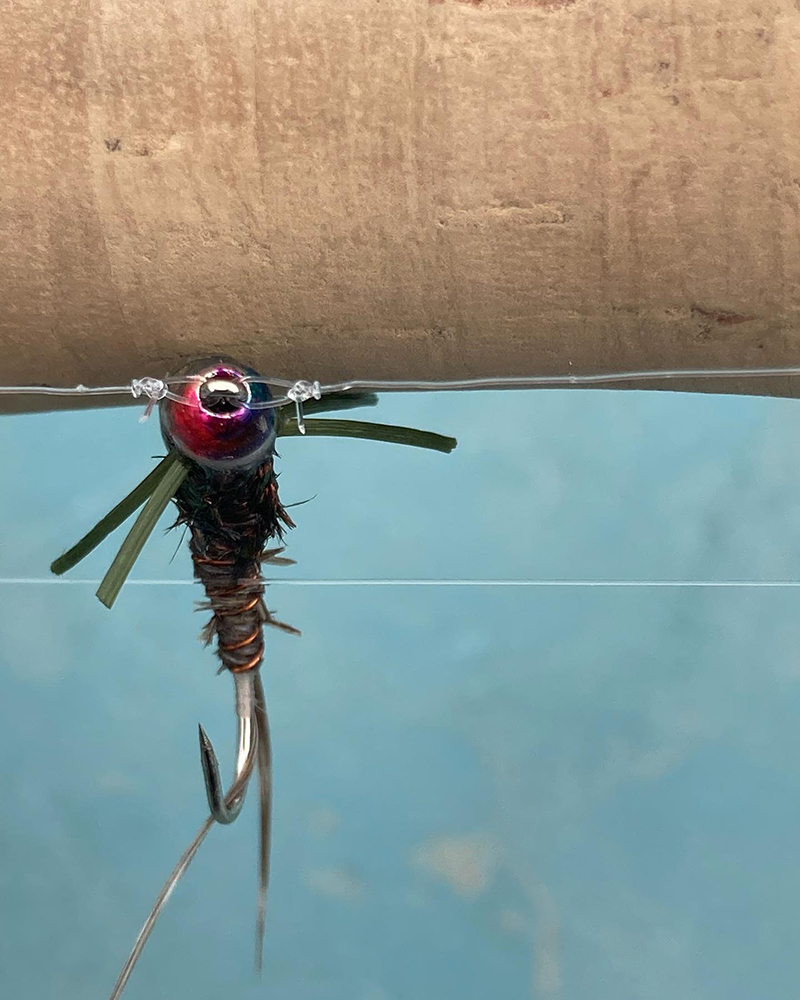
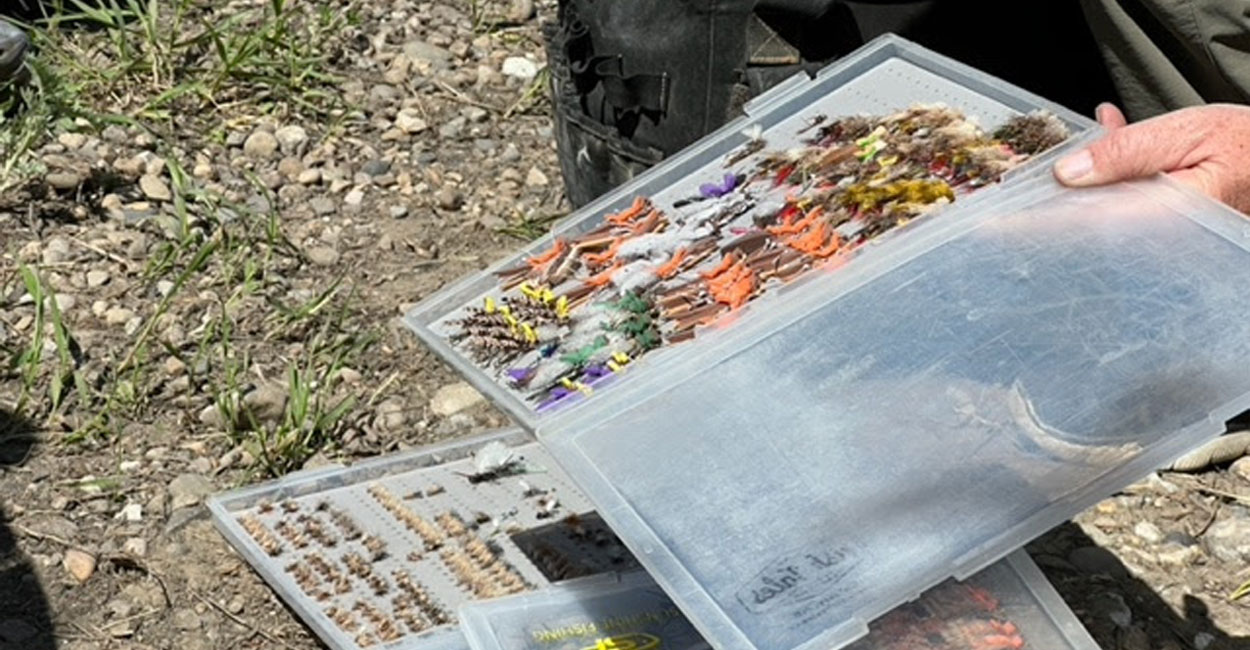
fly fishing flys made by bow river fly fishing

Navigating the Late Spring Freshet and High Water

Snowmelt changes everything. Sometime between mid-May and early June, depending on the year’s snowpack, the Bow rises dramatically and turns the color of chocolate milk. This period frustrates many anglers, but understanding how to adapt keeps you catching fish.

Strategies for Fishing Turbid Conditions

High, off-color water gives the Bow a slight green tinge with about 12 inches of visibility, and concentrates fish along banks where current slows and visibility improves. This is effective for large fish, you won’t hook many but they will typically be a good sized fish and 20 inches plus would be expected. Forget mid-river structure during runoff. Fish push to the edges, often holding in surprisingly shallow water.

Fly selection shifts toward larger, darker patterns that create silhouettes fish can detect. Streamers in black, olive, and brown work well. Egg patterns and San Juan Worms in bright colors also produce because they’re visible in murky conditions.

  • Strip streamers slowly along soft edges and backwaters
  • Use heavier sink tips to keep flies in the strike zone
  • Shorten your casts and focus on water within 20 feet of bank

Spring fed creeks or lakes offer an excellent alternative during Bow River runoff. Walk and wade access makes them ideal for anglers seeking a more intimate experience.

Safety and Access During Peak Runoff

High water demands respect. Wading becomes dangerous when flows are rising and unpredictable, and many access points flood completely. Check flow gauges before heading out, and never wade deeper than knee-level during runoff conditions. We recommend a wading staff anytime you’re in big water.

Float fishing remains productive during high water because it allows access to soft edges that bank anglers can’t reach. Experienced guides know which sections fish best at various flow levels and can position boats safely in challenging conditions.


making fly fishing flies

The Summer Prime: Golden Stones and Caddis Hatches

Late June through July represents the Bow River’s most celebrated period. Runoff subsides, water clears, and major insect hatches bring trout to the surface with abandon. This is why anglers travel from around the world to fish here.

Mastering Golden Stone Dry Fly Bite

Stonefly hatches transform the Bow into a dry fly paradise. Golden stones emerge in late June and early July, crawling onto streamside rocks to shed their nymphal shucks. Trout know this pattern and cruise banks looking for struggling insects. We see the most success on this hatch by getting on the water just before first light. We’ll get a few hours of amazing activity until the sun gets too high. Often, overcast skies will extend the bite Once the top water activity slows down, don’t be afraid to add a dropper like a small leech or a Jimmy Legs to your dry fly. The nymphs are always in the water. 

Size 8-12 golden stone patterns work best. Fish them tight to banks, within inches of the water’s edge. The take often comes immediately after the fly lands, so stay alert. Foam patterns float well and create the silhouette trout expect.

  • Cast upstream and let your fly drift naturally along the bank
  • Add subtle twitches to imitate struggling insects
  • Target water with overhanging vegetation and rocky banks

Walk and wade trips excel during this period because they allow anglers to cover productive bank water methodically. The Oldman River, about 90 minutes south of Calgary, offers similar stonefly activity with less fishing pressure. This river holds brown and rainbow trout that respond aggressively to large dry flies.

Evening Caddis Blizzards and Surface Action

Caddis hatches during summer evenings create some of the most exciting fishing of the year. Thousands of insects blanket the water, and trout feed with reckless abandon. The challenge becomes getting your fly noticed among the naturals.

Elk Hair Caddis in sizes 14-18 remain the standard, but don’t overlook emerger and pupa patterns. Trout often feed just below the surface on ascending insects rather than taking adults on top. A soft hackle swung through rising fish can outperform dry flies.

Evening fishing extends past 9 PM during peak summer, so plan accordingly. Bring headlamps for the walk out and consider the logistics of fishing until dark. It’ a good idea to have a face covering during a substantial Caddis hatch, they’re really not that tasty and they like to find eyes, ears and nostrils. 

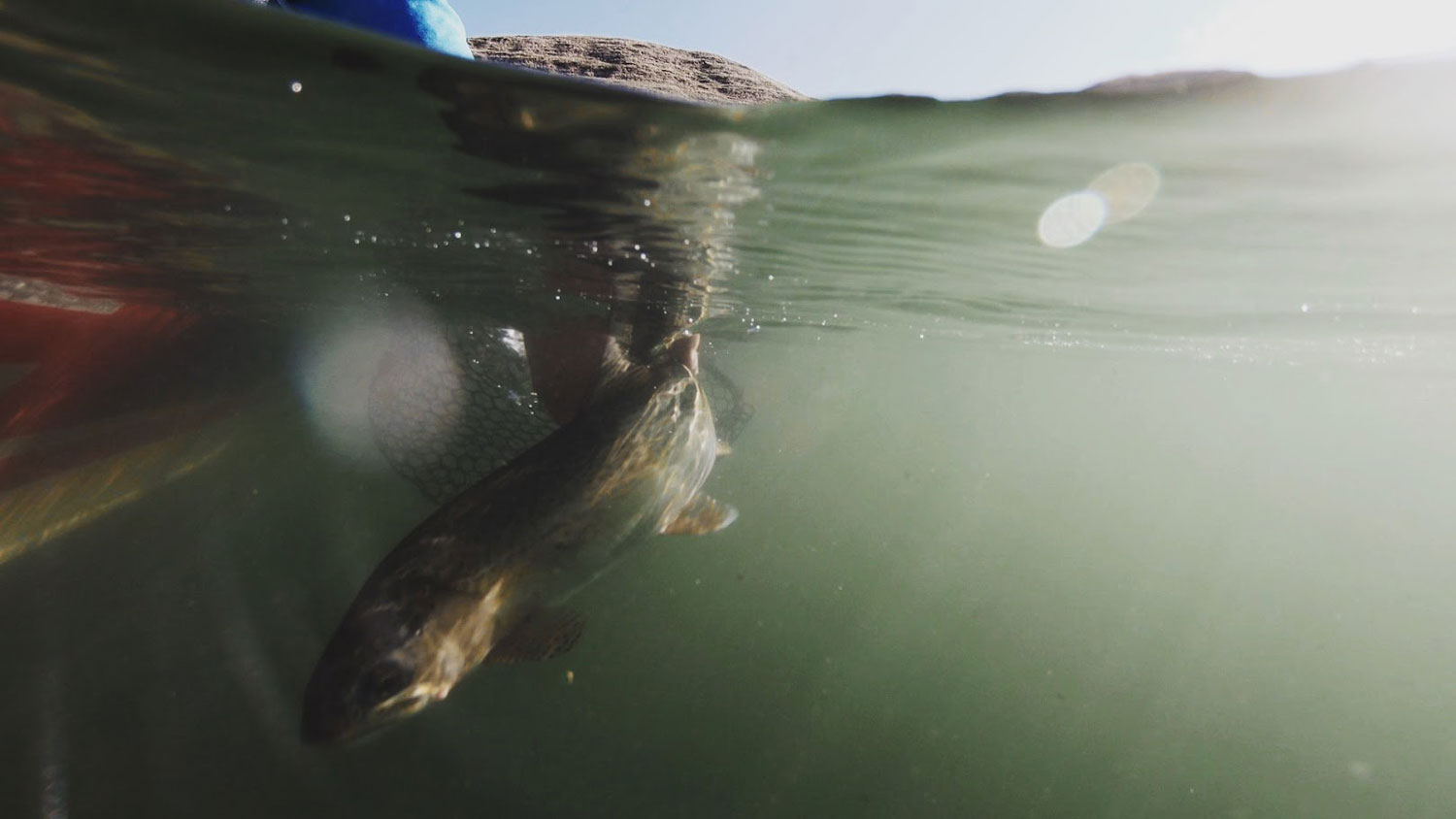
catch and release trout alberta

Late Summer Tactics: Hoppers and Terrestrials

August shifts the Bow River’s character again. Aquatic hatches diminish, but terrestrial insects fill the gap. Grasshoppers, ants, and beetles blown onto the water become primary food sources, and trout respond to large, meaty patterns.

Bank Slapping with Grasshopper Patterns

Hopper fishing rewards aggressive presentations. Unlike delicate mayfly imitations, grasshopper patterns should land with a splat that imitates the real thing hitting the water. Trout hear this commotion and investigate.

Size 8-12 foam hoppers in tan, yellow, and olive cover most situations. Fish them within two feet of grassy banks where natural hoppers live. The most productive water often sits directly beneath overhanging grass where hoppers fall regularly.

  • Make your casts land hard, not soft. Shorten up your leader and make it stiffer. 6 to 7 feet and 0x -2X will turn over a big foam fly nicely in the wind. 
  • Let the fly sit motionless for several seconds before adding movement
  • Follow up refusals with smaller patterns or different colors

Managing Heat and Fish Handling in Low Flows

Late summer brings low water and warm temperatures that stress trout. Responsible anglers adjust their tactics to minimize harm. Fish early mornings and late evenings when water temperatures drop below 65°F. Avoid fishing during afternoon heat when oxygen levels decrease and fish struggle to recover from being caught.

Handle fish minimally and keep them in the water during photos. Barbless hooks facilitate quick releases. If a fish appears exhausted after release, support it in current until it swims away strongly.

The Oldman and Highwood Rivers often run cooler than the Bow during August, providing refuge for both trout and anglers seeking comfortable fishing conditions. These tributaries offer walk and wade opportunities through beautiful Alberta foothill country.

Autumn Gold: Streamer Fishing and Brown Trout Spawning

Fall transforms the Bow River into a trophy hunter’s paradise. Brown trout begin their spawning migration, becoming increasingly aggressive toward anything that enters their territory. Meanwhile, rainbows feed heavily in preparation for winter.

When targeting Fall Browns, never target a fish actively spawning on their REDDS. You’ll see areas of cleared gravel in shallow water. If there’s fish on them, leave it be. It’s very interesting to watch, but please observe only and let them do their thing.

brown trout redd bow river

Aggressive Streamer Stripping for Trophy Browns

October and November bring the year’s best opportunity for large brown trout. Spawning fish defend their redds aggressively, striking streamers out of territorial instinct rather than hunger. This behavior puts fish over 24 inches within reach.

Streamer selection favors patterns that provoke reaction strikes. Woolly Buggers, Sculpins, and articulated patterns in olive, brown, and black work consistently. Strip them aggressively through likely holding water, varying your retrieve until you find what triggers strikes.

  • Target deeper runs and pools where browns stage before spawning
  • Fish streamers on sink-tip lines to reach holding depth
  • Expect strikes to feel like snags before the fish moves

The Blue Winged Olive Return

BWO hatches return in autumn, often more prolifically than spring. Cooler temperatures and shorter days trigger dense emergences that bring fish to the surface. Size 18-22 patterns in olive and gray match the naturals.

Fall BWO fishing rewards patience and precise presentations. Fish feeding on tiny mayflies become selective, refusing patterns that don’t match the hatch closely. Extend your leader to 12 feet or longer and use 6X tippet for best results.

Essential Gear and Licensing for a Bow River Season

A 5-weight rod handles most Bow River situations from April through fall. Add a 6-weight for streamer work and windy conditions. Floating lines cover 90% of fishing, though sink-tips prove valuable during runoff and fall streamer season.

Waders remain essential throughout the season. Breathable waders with felt or rubber-soled boots provide the versatility needed for varying conditions. Bring layers regardless of season, as mountain weather changes rapidly.

Alberta fishing licenses are mandatory and available online through the provincial government website. Non-residents should purchase licenses before arriving, as enforcement is active on popular waters like the Bow.

For anglers seeking guided experiences, Bow River Fly Fishing near Calgary offers both float trips and walk and wade packages tailored to seasonal conditions. Their experienced guides know where fish hold throughout the year and which techniques produce results. Whether you’re learning to fly fish or chasing trophy browns, a guided trip accelerates your success on these waters. Book your trip to experience what makes the Bow River one of North America’s premier trout fisheries.
 

2025 Year in Review: Fly Fishing the Bow River

By Scott Smith, Lead Guide

Thank you! We had so many great guests and memorable moments on the Bow River in 2025. We saw some amazing trout to hand this season, solidified relationships and experienced new beginnings.

Early Season Highlights: Caddis Hatch and Calm Waters

Early season gave us amazing conditions for the early Caddis hatch. Guests experienced head hunting the way it should be with big fish on small bugs. Smiles all around and way too much fun for us to feel like great hunters in the wilderness! We could see the Deerfoot Overpass, but still.

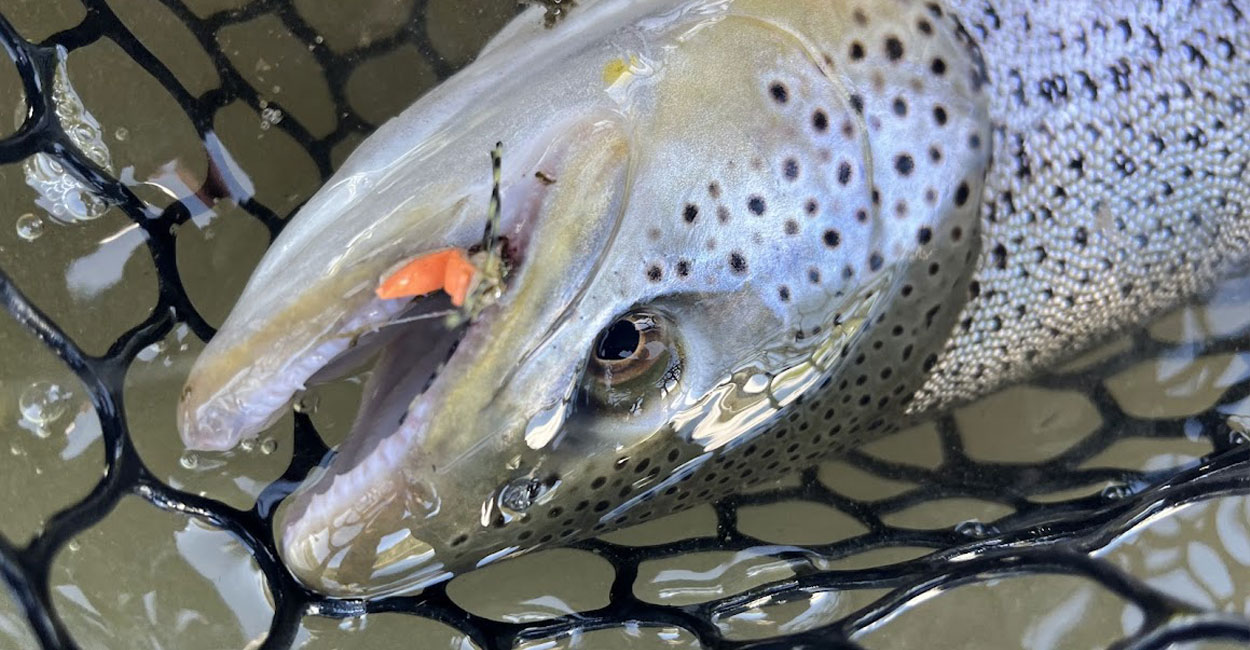
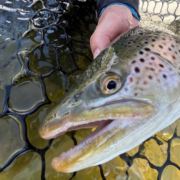
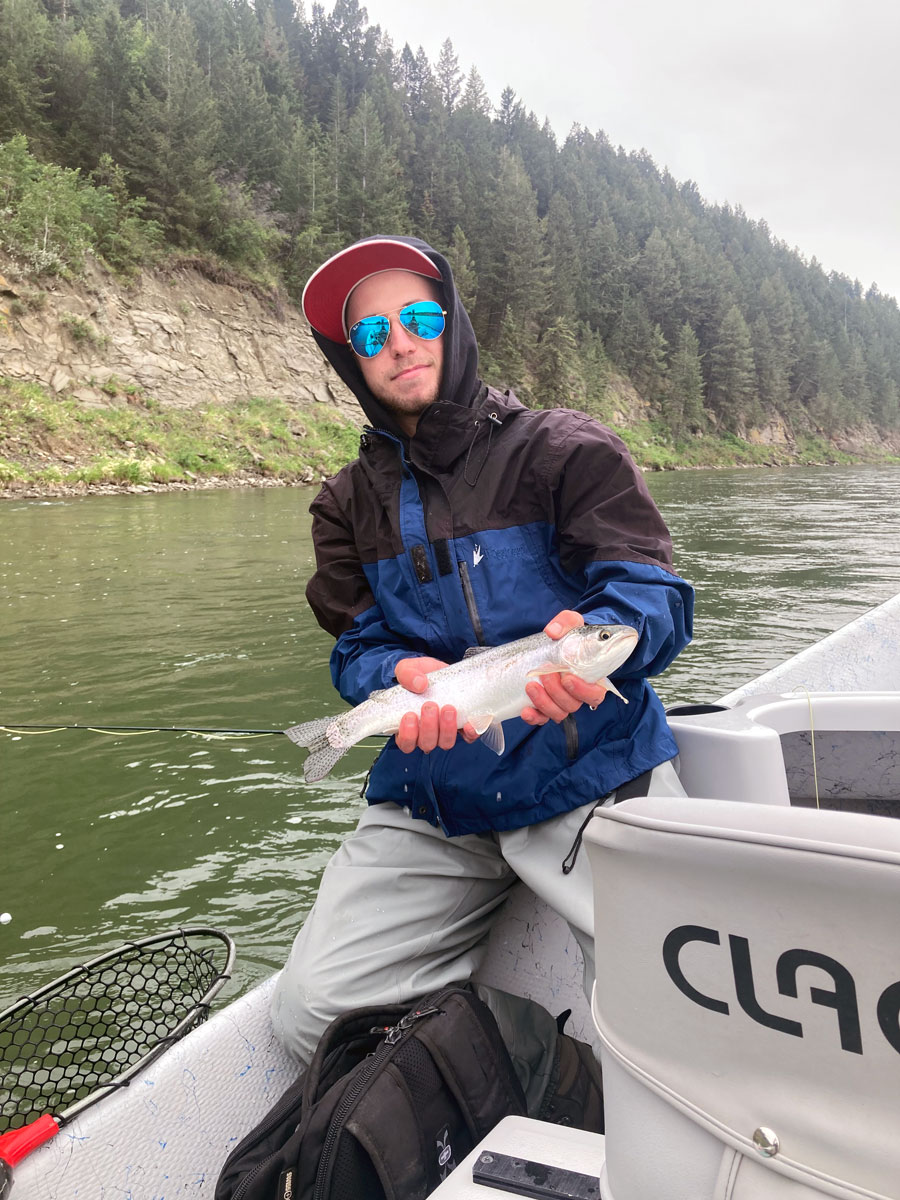
Close-up of Bow River trout hooked on a dry fly during summer fishing.

Midseason Challenges: High Water and Heavy Rains

So, July was terrible. We had record rains and the river was high, fast and dirty. We ended up rescheduling guests and providing refunds to many others. I pride our little operation in being easy to deal with. I want everyone to have a great experience on and off the water with us. Those that couldn’t reschedule and wanted to brave the high water, fought hard for one fish and I damn near ran out of jokes and stories to tell! 

We were happy to see the river settle down. However, I would much rather see high, cooler river conditions than the drought we were setting up for. Here’s to a heavy snow pack this winter!

Big Browns and Rainbow Rockets

Big Browns? Yeah, there were a few. If you follow any of the outfitters or locals on your socials, you witnessed some healthy fish this year. We had several guests hook up PB’s, which makes me a little goofy every time it happens. I love the mood in the boat when the guest says “Oh, this one’s got some girth!” and then dials into the fight.

The Bow River is truly a special place. Just ask me, I’ll tell you all about it! I especially appreciated the guests that needed a minute to stop shaking after the release.

The Buttered Beasts are certainly coveted but let’s not discount the Rainbows in the Bow. Guests had so many WOW hits this season! Rainbow Smashes made more than one angler screech a little when these bullets launched into space!

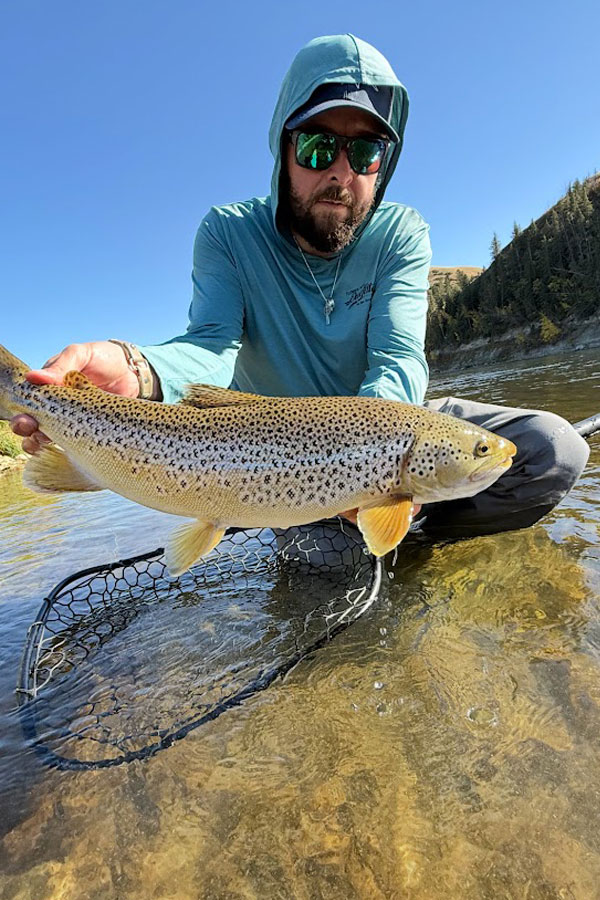
Releasing a Bow River brown trout safely back into the water.

Gratitude for Our Guides and Partners

All this serious fishing doesn’t happen without the guides manning the sticks: Garnet, Bryce, Nate, Jason, Peter, Oz, Mike, Gene, Blair, Nick, Trevor and Luke. I am lucky to connect with these great independent guides and fellow independent outfitters. These guys are all true pros and a ton of fun on the water to work with – Thank you gentlemen!

Lessons, Learning, and Collaboration

Personally, the 2025 season will hold many memories. I was fortunate to work a little with the great Linda McLennan from McLennan Fly Fishing. Linda helped me modify our lesson program, and taught a “teach the teacher” session that we arranged for several guides. This was a great day of exchanging ideas and techniques with other like-minded guides and outfitters. 

My favourite quote from Linda, “Always give yourself permission to teach.” No matter how long I’ve been at this, I can always learn. In fly fishing, we’re never at the top of the game.


Looking Ahead to the 2026 Fly Fishing Season

As we close out 2025, we’re filled with gratitude and excitement for what’s next. The Bow River continues to inspire us with its beauty, power, and potential. Thank you for being part of our journey. We can’t wait to see you on the water in 2026!

Choose Your Adventure!

Whether you’re a complete beginner or ready to “level up,” there’s a package tailored for you: from half-day floats, full-day adventures, 2-day boot camps, to corporate and group outings. All trips take place on the stunning Bow River near Calgary, where you’ll float or wade majestic waters and may encounter deer, bald eagles, beavers and more as part of the experience. 

When you’re looking ahead to 2026 and want to turn your next outing into an adventure, whether solo, with friends or as a team-building day, now’s the time to lock in your date. Visit the booking page to browse our unique offerings and reserve your spot today.

Book your next Bow River fly fishing trip today and experience the adventure for yourself.

How Fly Fishing Supports Mental Health: A Personal Perspective from the River

A Personal Take on Mental Health

by Scott Smith, Lead Fly Fishing Guide

We hear a lot about mental health and how important it is. I’ve always found this hard to quantify. I have good moments and not so great moments every day. In my previous work life, prolonged periods of stress just became the normal part of my daily routine. I never realized the negative effects of being “on” all the time and accepted the way it was, as normal. I tend to equate mental health with stress levels and I’m certainly no expert. I do, however, know where I like my thoughts to be and what brings me peace.

Why Fly Fishing?

Fly fishing has always given me a great release. In the beginning I couldn’t tell you exactly why I enjoyed it so much but I suppose it was the tug on the line that kept me coming back, but it’s so much more. I can’t tell you what fly fishing will do for your mental health, but now that I’ve been at it for many years as a fly fisher and the last nine years as a guide and teacher, I can make some observations you might identify with. Maybe fly fishing can be your escape or temporary release.

The Therapeutic Cast

The fly cast is therapeutic. The focus on the right mechanics and the pursuit of the perfect cast through repetition and finding control relaxes the brain and the body. Some days the fish just don’t matter and practicing the cast either while I’m fishing or on the soccer field puts me in the moment. Everything else disappears.

Mental Health On The Bow

Cracking the Code and Solving the Puzzle

Cracking the code takes focus and problem solving skills. What are the fish eating? Where in the water are they holding? What is the right fly choice? What is the best way to present the fly? Asking questions, observing the environment and deciding on the approach can be wonderfully complex and all encompassing. I love figuring it all out, especially on water I’ve never fished before.
The Joy of Anticipation

Anticipation is a big part of the excitement. Anticipation for the next trip, the next bite, what’s around the next corner, who I’m fly fishing with etc. Fly fishing is all about the anticipation for big and small moments. You never know which ones will create lasting memories.

Fly Fishing With Friends

Preparation as Meditation

Preparation for the day. This one isn’t for everyone, but I love organizing my fly boxes, making sure my leaders are fresh, my rigs are solid and the drift boat is washed, packed and ready. When I’m preparing to guide, it just reminds me I’m here and I get to work at what I love doing. For me the preparation is a big piece of the anticipation of what’s to come.

Watching the Water: Stalking Rising Fish

Stalking rising fish. I love to just observe rising trout to discover their rhythm, what they’re feeding on, how they move and turn on their prey. I learn so much and my brain stays completely focused and on task.

Reading While Fishing

Learning Through Reading

Reading. There is so much history to discover in this sport and so many great authors have captured the beauty of fly fishing along with the great teaching books. I love taking new to me ideas and applying them on the river. I’m always learning and taking steps to improve as a fly fisher, a guide and a teacher. The journey to be better and continue learning will never end.

Time with People

While guiding and out with friends it’s all about some good laughs and celebrating the wins. We’re learning, hooking a few fish, taking in the landscape and just enjoying the vibe of the day. The best days are the ones that end with someone exclaiming, “Damn I needed that!”

Watching Water

Time without People

Sometimes I don’t tell anyone that I’ve even gone fishing. I head out with Hopper (the dog) and we just explore and fish. No one around, No Social Media Posts, No Pictures. Hopper often gets back in the truck at the end of the day with a satisfying sigh that says “Damn I needed that!”

Your Own Fly Fishing Story

You’ll have your own reasons to pick up a fly rod. If you haven’t experienced it, try it. If it’s been a while, dust it off and head to the river. All I know is I’m never disappointed by a day outside, especially with a fly rod by my side.

Deep Water Nymphing: A Guide’s Perspective

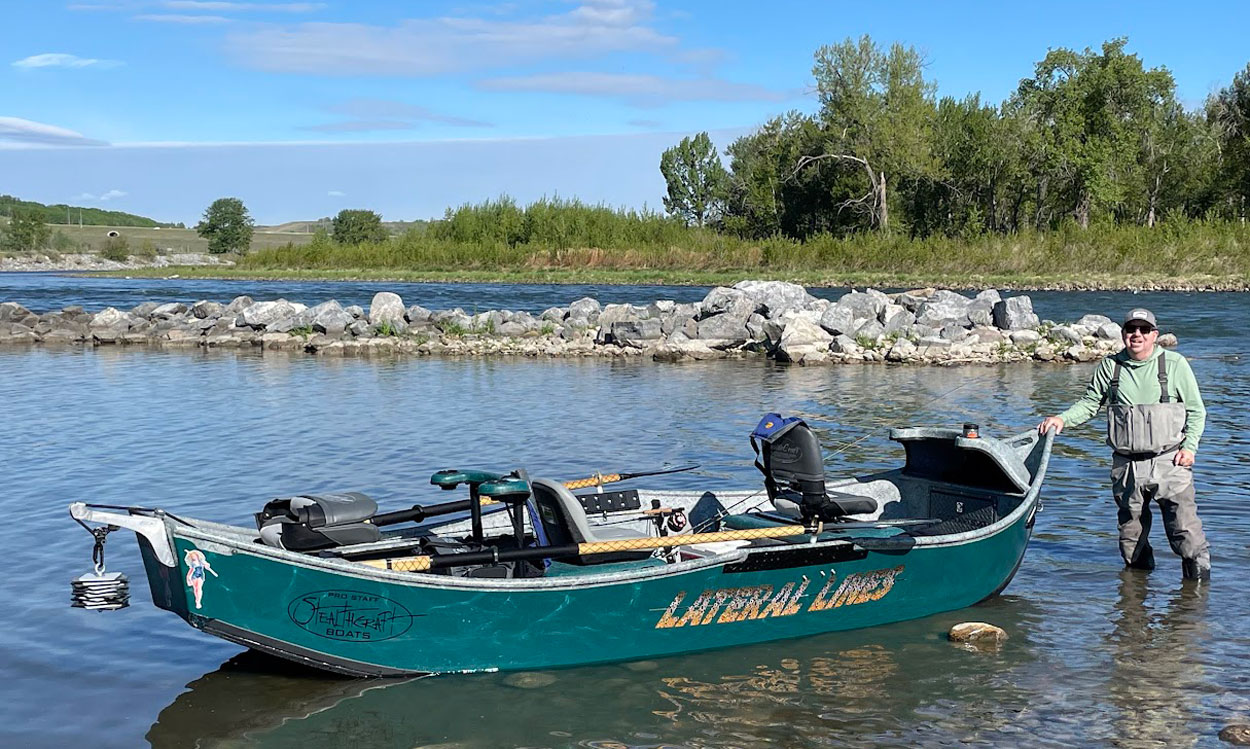
Drift boat fly fishing in southern Alberta.

Mastering the Art of Deep Water Nymphing on the Bow River

By Scott Smith, Lead Guide

We are fortunate to have a damn fine fishery on the Bow River. Like many larger rivers, we enjoy opportunities to fish our choice of methods and experience success. As an outfitter, our little operation works with a lot of pure first-timers, and I like starting new fly fishers with Deep Water Nymphing.

Why Deep Water Nymphing Works for Beginners

A Simple Approach to Fly Fishing Success

I start guests off by teaching a water-loaded, tight-line flip cast (I made that up, but that’s how it looks to me). Guests pick it up very quickly, and we’re headed down the river in short order. Many other guides teach the same way, and it certainly isn’t anything I invented. Rod movement, line placement, and mending mechanics get easier as the float progresses. Our new, or mostly new, fly fishers are hooking trout and building confidence as we go. Most importantly, they’re having a great time!

Avoiding Casting Frustration

Earlier in my career, I chose to start new fly fishers with some dry-land casting the way I was taught. Rod stop, acceleration, tight and tailing loops….blah, blah, blah….No fun at all. Mostly confusing and a recipe for guest frustration. Yes, we need to learn good casting skills, but not on a rookie float.

Get the line in the water, hook a few fish, and leave guests motivated to learn more. Proper casting mechanics be damned!

Deep Water Nymphing Techniques for Experienced Anglers

The Difference Between Wading and Drift Boat Nymphing

We also see many local folks who just haven’t had any “luck” on the Bow River but definitely have casting skill and know their way around a drift. There is a difference between wading and nymphing from the drift boat.

  • Drift boat nymphing: The boat is moving, and the guide compensates for current speeds to help that indicator float Au Natural.
  • Wading nymphing: The wading angler has more work to do—breaking down current lines, changing angles, adjusting depths, mending continuously, and controlling rod movement for a good presentation.

The Best Deep Water Nymphing Setups

Let’s start with some set ups. During lessons we work on some basic rigging. There is no magic to our deep nymph lines and the guides I work with all have different variations they prefer. I am going to share what works for my guests to put fish in the net.

Rig #1: The Barrel Swivel Rig

One of my go-to setups involves:

  • A #7 barrel swivel with split shot added above it as needed.
  • 16” to the first fly and another 10” to 12” to the point fly.
  • A meaty top bug (e.g., wire worm, chenille worm, wooly bugger, leech, etc.) secured with a non-slip loop knot on the first bug to secure it to the swivel and to the point fly. This way the top bug is presented in line and tangles are reduced.
  • A smaller point fly (sizes 12-20 tungsten beads) that reflects the dominant bug of the season, such as Pheasant Tails, Brown Hare’s Ears, Olive Hare’s Ears, Prince Nymphs, Frenchies (Pats Rubber Legs, TJ Hooker, will often be the top bug during stone fly season or high water).

Bow River Fly Fishing Nymphing - Deep Nymph Rig

Rig #2: The Drop Shot Rig

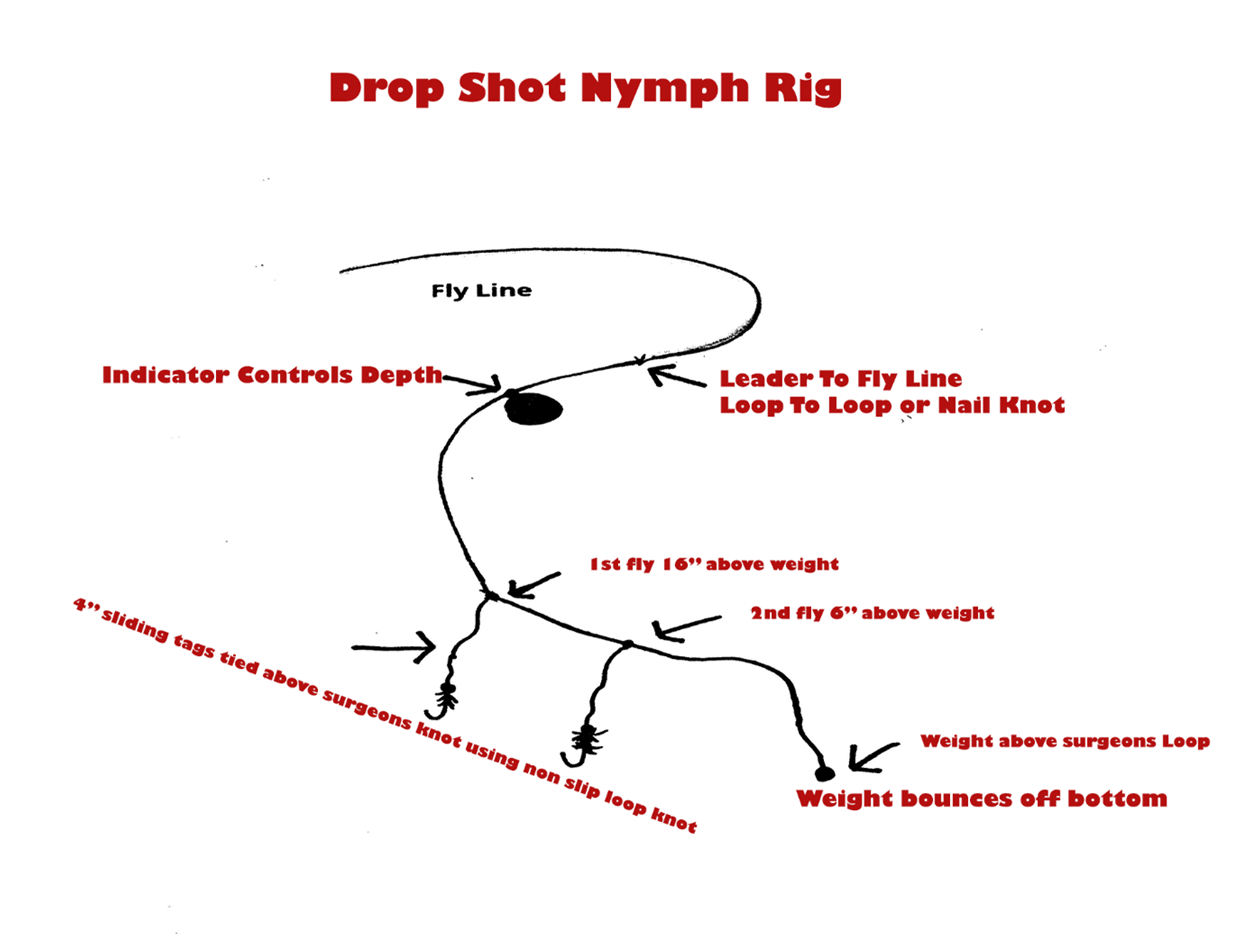
The drop-shot rig is another effective setup but is more prone to tangles, especially for first-time fly fishers. The key benefits include:

  • Triple surgeon’s knots to create tags no longer than 4 inches. I will tell you straight up, I don’t use this often because it often tangles like crazy with first time fly fishers.
  • A more consistent depth during the drift.
  • The ability to adjust flies based on fish preference—if one fly is working better, we swap the other accordingly.

Keep in mind, we’ll often experience fish taking one bug over the other, so If we’re having a tangly day, I’ll just take the other bug off the line. But, if we’re managing the rig well, I’ll either put the same bug in a different size, or adjust to something completely different.

Bow River Fly Fishing Nymphing - Drop Shot Nymph Rig

Choosing the Right Flies for Deep Water Nymphing

Seasonal Bug Selection and Hatch Charts

I’m on the water nearly every day, and patterns develop. Sometimes this is a good thing and sometimes it means I get blinded by what I’m supposed to know. Observe and fish to what is, not what you think it should be.  But even for seasoned anglers, a hatch chart is your best friend. It helps predict the dominant bug pupa for the season, even if no hatch is currently happening.

One of my favorites? A brown hare’s ear as a point fly because Caddis Pupa are present from May through October.

Adapting to Water Conditions

Water conditions fluctuate due to dam management, rain, or both. These conditions impact what’s drifting in the river:

  • Murky, high water: Dislodged leeches, aquatic worms, stoneflies—so try a Wire Worm or Wooly Bugger dead drifted.
  • Stable water levels: Follow the hatch chart and match dominant seasonal bugs.

Adjusting Depth and Weight for the Perfect Presentation

Finding the Right Depth

On the Bow River, I use deep nymph rigs for water deeper than 4 feet. For slower water under 4 feet, these rigs tend to snag more, so I prefer a hopper-dropper or naked nymph setup.

Adjust your indicator depth often, especially while wading. When fishing a drop-off shelf:

  • Use a shallower setup at the transition.
  • Deepen the rig as you fish the heart of the run.

Fine-Tuning Your Weight

If fish are holding in the run but not biting, you may not be deep enough. Adding weight helps get flies in the strike zone faster.

On the other hand, if your rig snags constantly, you may be too heavy. A little trial and error go a long way.

Mastering Line Control and Drift

Tips for a Natural Drift

  1. Shorter casts = more control. Move your feet instead of making long hero casts.
  2. Keep your rod high and follow the indicator with the current.
  3. Mend as needed, not just once. Adjust and move the rod downstream with the drift.
  4. Vary casting angles and drift lanes. Repeating the same drift with no success? Change it up!
  5. Set on everything! If your indicator twitches, hesitates, or moves sideways—set the hook!

Summary: Why Deep Water Nymphing Works

Deep Water Nymphing is a highly effective method for both beginners and experienced anglers on the Bow River. By using the right rigs, fly selection, depth adjustments, and line control techniques, you can consistently hook trout and improve your success.

Book Your Fly Fishing Adventure Today!

There’s no substitute for time on the water! Whether you’re a beginner looking to hook your first trout or an experienced angler refining your deep-water nymphing skills, a guided trip can make all the difference.

Book your trip today and let’s hit the Bow River!

Learn more about our beginner lessons, guided trips, and educational resources.

A Look Back at the 2024 Fly Fishing Season on the Bow River

By Scott Smith, Lead Guide

Reflecting on a Memorable 2024 Fly Fishing Season

The 2024 season has come and gone way too quickly. Thank you to all our guests, guides, and partners for allowing us to avoid real jobs and get on the water every day! Mother Nature kept river flows steady, water temps cooler, and thwarted the drought conditions we were expecting. Healthy, thick, line-ripping trout let us know they also appreciated the stable conditions. Here’s to big snow in the Rockies this winter!

guide helping guest with large trout catch

Grateful for Returning Guests and Community Support

I am beyond grateful for all our returning guests! I was kept extremely busy this season, mostly because you came back for more! Several of you came out for multiple guided days in 2024, which means I need new boat jokes. I’m working on new material in the off-season, so be ready!

We have a fantastic guiding community on the Bow River. As an independent outfitter, we often collaborate with other outfitters and guides for group trips or when our staff guides are fully booked. This community spirit was essential, especially during the busy 2024 season. We’re thankful to work in this vibrant fly fishing community!

Large trout caught by drift boat fly fishing

Most Popular Fly Fishing Trips of 2024

By far, our most popular float trip was the Half Day Beginner Float, which we’ll continue to offer. We love getting people into our sport, and this is a great place to start. A close second is the Bow River Boot Camp. This combination of our introductory lesson package with a half-day float became a real hit during 2024. I had a ton of fun teaching this past season, and it was great to see so many of our guests on the river afterward, practicing skills and enjoying time on the water.

fly fishing gear from group trip on bow river near calgary

Advice for Beginners: Keep at It!

The best piece of advice I can give anyone starting out in this sport is to keep at it. Grab that fly rod and figure it out. Make a mess. Find out what you can and can’t do, and always return to the fundamentals to correct casting mistakes. You’ll soon learn to move your feet and where to place that fly for the best drift.


fly fishing lessons in group setting

Build Your Fly Fishing Skills and Knowledge

Learn your knots so you can quickly change your fly selection or adjust the size of your bug. Soon, you’ll understand why depth matters more than fly selection, and you’ll figure out how and why to fish one rig over another. While there’s plenty of information available, nothing beats getting out the door and onto the water.

women fly fishing group in calgary, alberta.

Find Your Fly Fishing Community

My second piece of advice is to find your people. I’ve been fortunate to build friendships with great fly fishers and even better people. Some of the best relationships start with, “You Fly Fish?” There are several clubs and groups you can join to connect with like-minded anglers:

For more resources, visit our Fly Fishing Resources page.

lead fishing guide with large trout

Discovering Your Favorite Fishing Spot

Lastly, find your water. When I began taking fly fishing seriously, I had a spot I’d visit as often as possible. Even today, I head there whenever I get the chance. This area has become my testing ground and foundation for learning about river anatomy. This stretch of water features a shallow riffle, transitions into an inside run, and then flows into a flat before hitting a second riffle. The second riffle dives into a deep run and forms a soft pool off a defined point adjacent to a high bank.

Fishing here at different times and in varying weather conditions taught me where fish hold, what the bug life is doing, and how fish react to different presentations. It’s time well spent for learning and often being humbled.

kevin with large trout catch on bow river

Looking Ahead to the 2025 Fly Fishing Season

We love being part of your fly fishing journey, and we’ve got some exciting opportunities planned for 2025. We hope you’ll join us on the Bow River! Check out our Guided Fly Fishing Trips for the upcoming season.

First-Time Fly Fishing Experience with George: A Memorable Rainy Day Float

By Scott Smith, Lead Guide

Meeting George: A Newcomer to Fly Fishing

At the end of May last season, George, exuding a classic Alberta blue-collar vibe, called me while I was at the tire shop getting new tires for the old Fishin’ Truck. He spoke with purpose and clarity about wanting to try fly fishing without immediately investing in all the gear. Consequently, we arranged his first time fly fishing lessons with a Half Day Lesson Float, which is ideal for beginners.

beginner fly fishing lessons on bow river with George.

The Chilly Start of Our Adventure

We met near Mackinnon Flats on June 1st, a day characterized by overcast skies and a consistent, cold drizzle. This weather, while not ideal, was pretty close to what one would hope for in early summer. However, the light breeze was enough to create a noticeable chill.

Initially, I was expecting someone closer to my age. I am seasoned—let’s just leave it at that. Surprisingly, George was a 21-year-old with a beaming smile, dressed in jeans, a light hoodie, and cowboy boots, topped with a trucker’s cap. He greeted me with a firm handshake, and I could immediately feel his excitement.

George’s Optimism and Preparations

“Great to meet you, George. Grab the rest of your gear and throw it in my truck,” I welcomed him. Amused, he replied, “This is all I brought.” I smiled and shook my head, then gestured for him to hop into the passenger seat of the Tundra. Despite my instructions to dress for the weather, George was underprepared, but I reassured him, “Not to worry, I have waders, boots, and rain gear for you.”

George’s Background and Independence

During the ride to the boat launch, I learned that George worked on the oil rigs and had recently left a Hutterite Colony. This independence was new to him, and he had left with only a few personal possessions. His spirit impressed me as he talked about his new adventures.

Convincing George to Dress Appropriately

At the launch, it only took a minute to convince George to dress appropriately. He showed a feigned reluctance while sliding on the waders and the rain jacket I offered him. After handing him a fly rod and taking a quick inventory, we set off.

Fly Fishing Lessons Begin

I anchored in a shallow run, and we began the casting lesson. Teaching beginners from the boat has always been effective, and George quickly grasped the basics. With my coaching, he worked on his casting and mending.

A Day Without Distractions

The river was exclusively ours that day. We saw no other boats at the launch that morning and no other vehicles were parked, which indicated we would likely have no interruptions. It’s rare to have a world-class trout river all to yourself.

George’s First Catch

As we drifted into a likely riffle, George executed a decent cast. “Okay, cast again about 6 feet past where my oar is pointing,” I instructed. After a big mend upstream and a floating bobber, the indicator hesitated. “Set!” I yelled. Before George could react, a sizable Bow River Rainbow trout leapt out of the water. The line went tight, and George gripped it against the base of the rod as I had shown him, but the line went slack suddenly. George erupted into laughter, thrilled by the experience. “Did you see that? I had him!” he exclaimed, clearly hooked on fly fishing.

More Success and Memorable Moments

The boat slid into a mid-river shelf where we continued our fly fishing efforts. After a few casts and corrections, George’s indicator signaled another catch. As he managed to keep the rod bent and the line tight, he skillfully allowed the fish to take line without losing touch. “Like this? Like this?!” he yelled excitedly.

George’s First Successful Catch

“Yeah, man! You’re doing great!” I encouraged. After a few more strategic maneuvers, I slid the net under the fish, and George had his first successful catch on a fly rod. “That was amazing! Just so cool! Did you see that?” he exclaimed, still vibrating with excitement.

beginner fly fishing lessons on bow river, catching a trout in net.

Reflections on a Day Well Spent

It’s true that we remember moments. George and I had an outstanding day, despite the rain and cold, and we landed several more fish. While I don’t recall many details of the rest of the day, that first fish is etched in my memory.

Inviting New Anglers

We love bringing new fly fishers into memorable moments. If one of our fly fishing adventures appeals to you, get in touch, and we’ll set you up for a great time on the water!

Bow River Fly Fishing: Anticipation for the 2024 Season

By Scott Smith, Lead Guide

As the season begins, I’m already excited for the 2024 guiding campaign. Experiencing a mild off-season in the Calgary area, plenty of winter trout pics fill my social feeds daily. I’m not a winter fly fisher, but I certainly appreciate the need to get on the water at every opportunity. Perhaps tomorrow will be the day?

Scott fly fishing guide with drift boat on the bow river near Calgary.

Life as a Bow River Guide

Feeling extremely fortunate, I am among an amazing group of outfitters and guides working on the Bow River. Being on the river almost daily, I’ve met and worked with so many great people. Loving our guiding community, we support one another. Each guide brings a different perspective, always with the guest’s success top of mind for the day. In recent travels, I’ve been lucky enough to visit some sought-after trout waters in Montana and Idaho the past two seasons. While adventuring the Henrys Fork and the Bighorn Rivers, I was guided by some top-notch pros.

What Defines a Great Fly Fishing Guide?

Regarding engagement and communication, I value guides and outfitters that ask many questions. From the first hello, I hope to connect and have an easy conversation with potential guests. After all, when you book a float, you’re going to be stuck in a drift boat with each other for a solid 8 hours or more. During our initial chat, I ask questions to paint a picture of your ultimate day. Once we discuss it together, I can plan your unique trip down the river. Even if booking online, we ensure we build your trip based on shared expectations. Once we’re on the water, I appreciate a guide who leads with confidence.

Discovering the Passion of Fly Fishing

Talking about passion, if you’re discussing your trip with the outfitter, you can just tell they love what they do. The best guides I know bring the same passion and excitement on Day 100 of the season as they do on Day One. Despite the challenges, guides get tired. We’re out there for long days, preparing lunches, washing boats, adjusting gear, and sleeping. However, my motivation comes every morning when I meet the guests for the day. Your excitement and anticipation energize me and keep me fresh. During the float, I love to see you hook up trout, but I also celebrate seeing you make that perfect cast or lead a dry fly perfectly into a big brown.

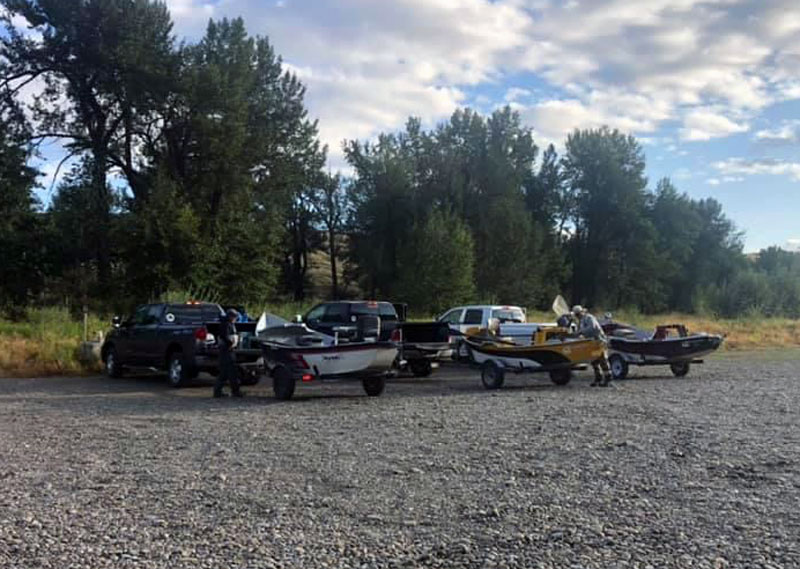
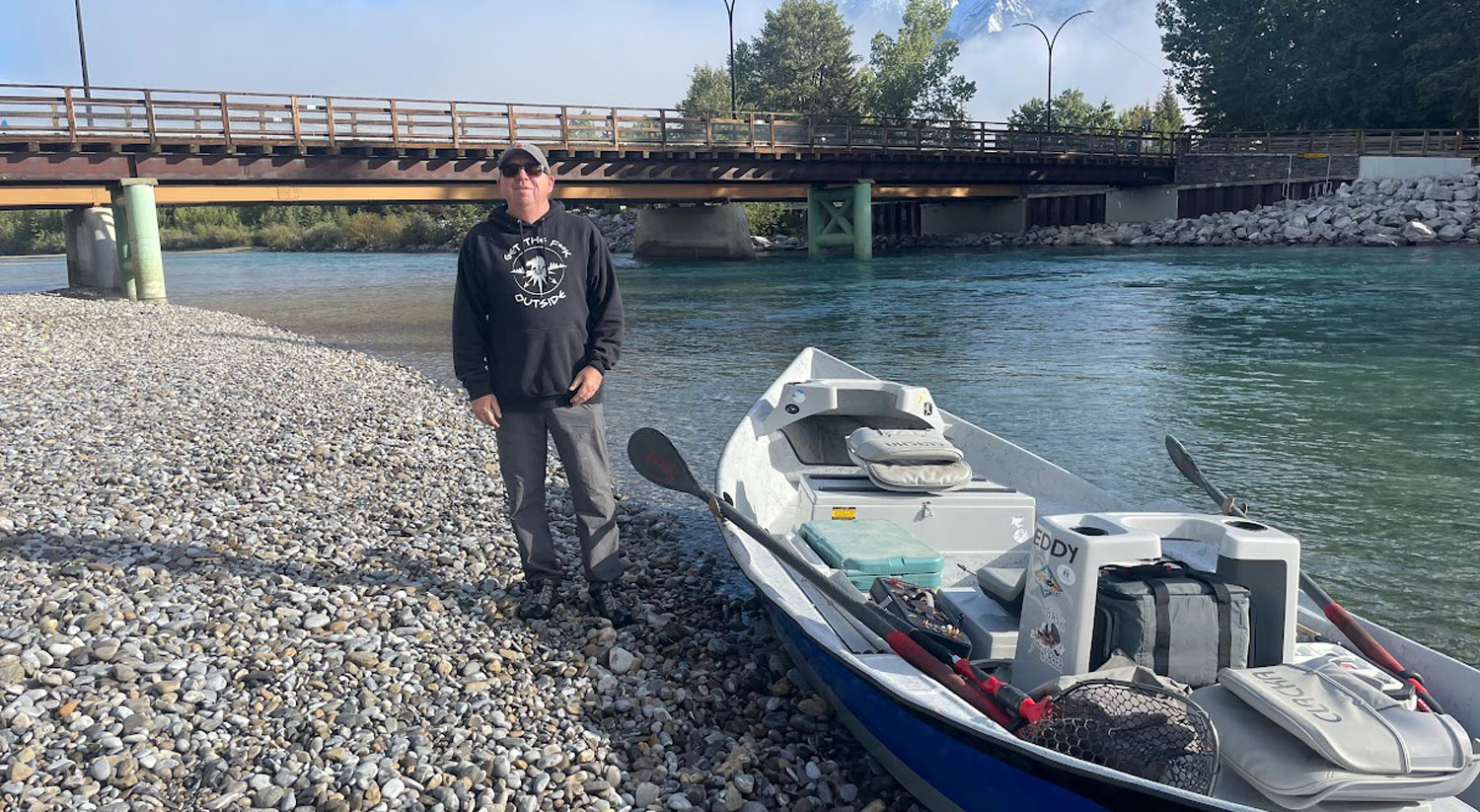
fly fishing adventure prep drift boats

Building Skills and Patience in Fly Fishing

Considering skill and patience, I’ve been fishing with a fly rod for a long time but I’m always learning. Each outing with a fellow guide, or experienced guest, teaches me something new. Great guides help you with your game no matter where you are on your fishy journey. Taking moments to teach, skilled guides can turn a good day into a great one by improving casting, presentation, rigging techniques, or just reading the water.

Gaining Knowledge and Experience on the Water

With a focus on knowledge and experience, your guide should have good historic knowledge of the water they’re guiding. Learning about the area, I enjoy discovering interesting facts about the geography or human history of the places I fish. Additionally, your guide needs to know the river intimately along with the bug life.

Flexibility and Preparation in Guiding

Starting my guiding journey, I learned the importance of flexibility. Your guide should be well-prepared with the right gear and flies, and also for unexpected issues like broken rods, reels, line failures, and weather events. Being prepared for mishaps is part of good guiding. It’s perfectly okay to ask what safety and contingency gear is on board.

Character Traits of a Successful Guide

In terms of character, it goes beyond showing up on time and having a clean vehicle and boat. When I’m on the water, I’ve learned to relax and let the day unfold, taking what the river offers while respecting the guest vibe. I ensure my guests are enjoying every part of their trip genuinely. Maintaining respect for all, it’s also important that guides never speak poorly about other guides on the river and practice etiquette beyond expectations.

scott luke bow river fishing guides trout

How to Be a Great Fly Fishing Guest

Being upfront about your expectations helps us tailor your adventure. Assessing your skills realistically avoids misunderstandings and ensures a more enjoyable experience. Staying curious, asking lots of questions, and not being afraid to explore new techniques can significantly enhance your learning and enjoyment on the water.

Making the Most of Your Fishing Trip

Encouraging fun, remember, this is fishing in a beautiful river valley. The atmosphere is relaxed, there is little to no cell service, and the guides think they’re funny. Enjoy every minute including the impossible tangles, missed fish, and casts in the trees!

bow river valley near calgary for fishing

Make Your Fly Fishing Trip Memorable

Embracing every moment, remember, this is fishing in a picturesque river valley. The relaxed atmosphere, the minimal cell service, and the humor of the guides all contribute to a unique experience. Enjoy every aspect, including the challenging tangles, the one that got away, and even the occasional tree snag.

Plan Your Adventure on the Bow River

As we look forward to a new season, I hope it holds many adventures for you. If a Bow River float is on your agenda, check us out to see if we’re a good fit and get in touch! We’d love to have you out to wet a line and share some stories.

Winter Fishing Rescue on Bow River and Lessons Learned!

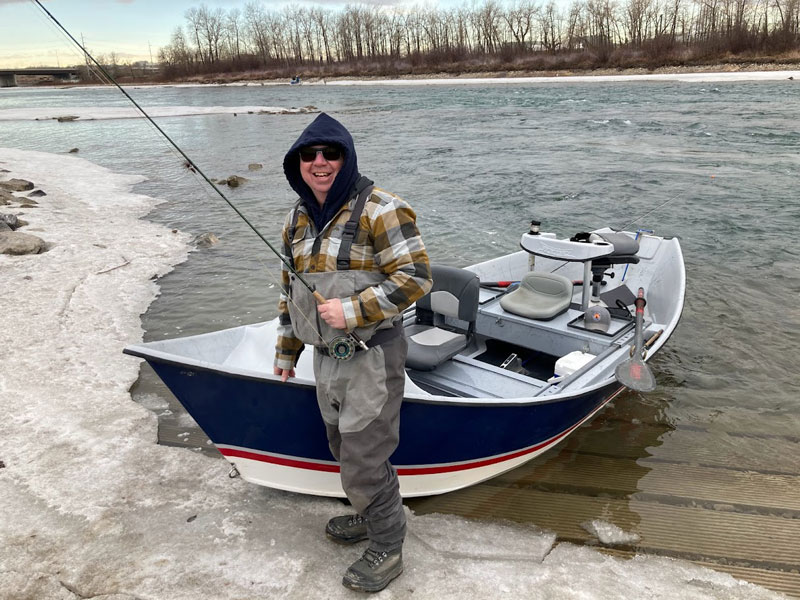
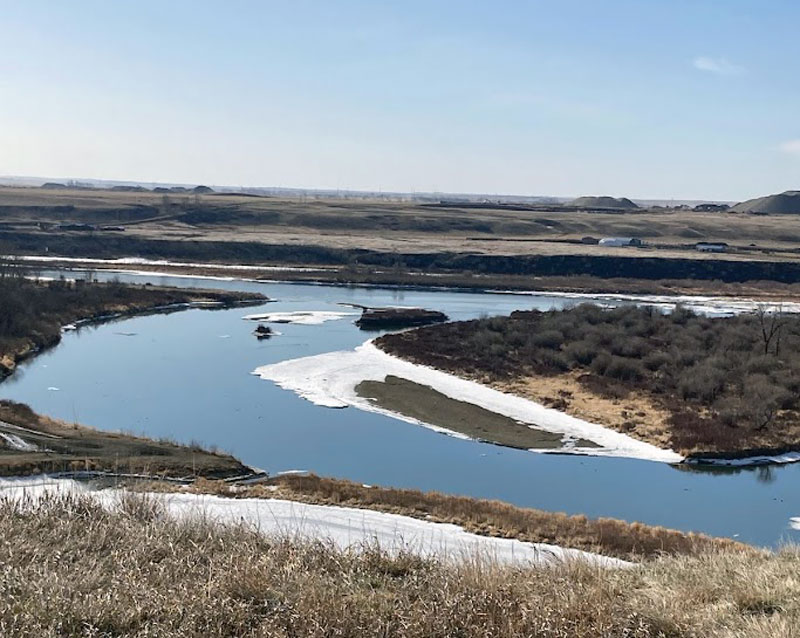
I am writing this one as a caution. I’ve spent countless hours on the Bow River, especially the stretch referenced in this edition of our blog. I am not proud of what you’ll read below. The caution or lesson is preparation and mitigation. Winter fishing is not typically my thing but we’re experiencing a mild winter so far and anglers are taking advantage of the open water on the Bow. I often walk Hopper, my fishing dog, along a ridge above the river where I can clearly see a five kilometre stretch of water.  As of November 28th, the channels were all ice free where the river splits into three channels approximately one kilometer from the boat launch.

One of my favourite guests of our fly fishing trips asked if we could take a friend of his out for a winter float. The friend, having some health issues sounded like he really needed a day on the river and I accepted the trip. Besides, the weather was great and a fire with a hot shore lunch sounded like a fantastic idea, fish to the net optional.   I needed to prepare, I headed out on my own for some recon the day before our scheduled float to find a few fish, drop off some firewood and enjoy some winter sunshine.

Legacy Island Launch

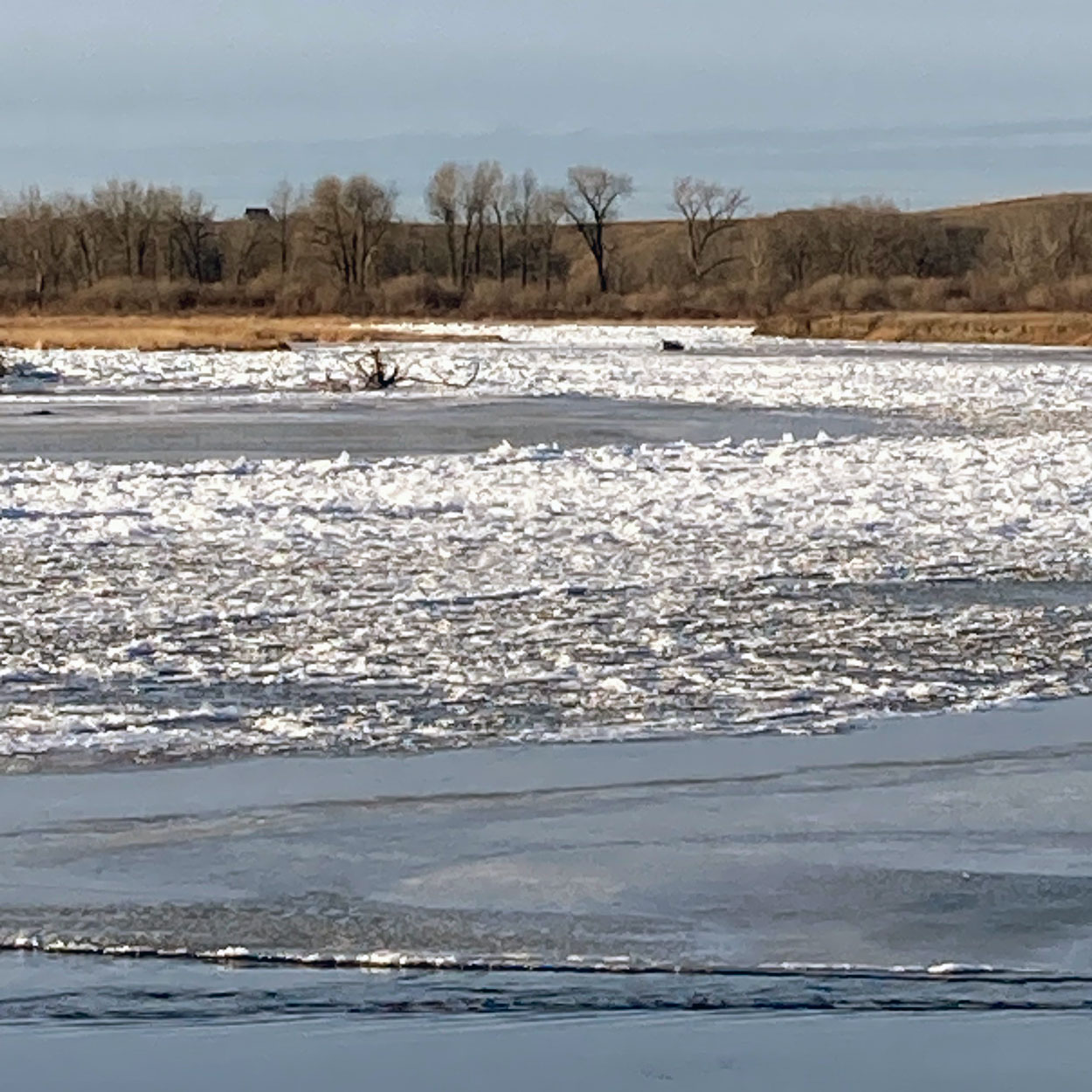
Launching at Legacy Island, also known as Jensen’s for many. It is December 1st and with plenty of slush visible in the current so I need to pick my spots today. I anchored a few times along the way, tossed some bugs and had a pretty good day that included hot coffee with a damn fine PBJ by the fire. My plan was to be home by 4pm to whip up a batch of chilli for tomorrows float.

winter fishing float bow river shoreline with slush.

Lesson One

I should have checked the take out point at Carseland BEFORE I launched at Legacy. Its winter with some steep temperature changes overnight. This time of year, open water two days ago is NOT a good indication of open water today.  

Lesson 1A

Fish with a buddy, preferably one smarter than you are.

The Bow River braids off near the irrigation weir at Carseland. Floating this section hundreds of times over the years, I know the channels and where I like to guide the boat.  The current slows considerably up stream of the weir.  Today I chose river right, heading towards the log jam.  The far right channel, just up river from the big farm house, is full of slush and the river stops moving. The boat launch is roughly 700 metres away, just around the corner.  I stop the boat, or rather, the accumulation of slush stops the boat.  I am close to the high bank on river right, the island on river left. There is moving water on the other side of the island. I decide to row back upstream and float down the next channel over. Winter fishing conditions mean low, slow water flows and I easily and quickly row back up and over to the next run. Pointing the boat slowly through the thread of open water available, it’s now around 3:45pm and the light is fading. I notice my phone is at 1%. Dammit!

Lesson Two

Take a charging block in the boat or backpack. I nearly always have one of these with me as part of my safety gear.  I didn’t today.

I make a quick call to my wife and let her know what I’m up against. We agree to give me a couple of hours and then she’ll worry.  From here, the middle channel is on my right or a substantial slow water channel to my left. I typically avoid the left channel. It’s slow and appears to be frozen all the way across. I drag the boat onto an ice shelf and explore the middle channel. I break through easily into thigh deep water. With effort, the boat moves along the ice but my feet break through. The good news is, I’m slowly moving towards the launch.

It’s now 4:20pm, I’m quickly losing light. Struggling with the boat to around a half kilometre from the launch, the ice gets thicker and the water is now above my waste. I’m in waders with good thermals, wool socks, well layered and still comfortable. I have great gear. I’m getting tired and push the boat closer to the shore. I’m behind the boat, lifting my knees to the ice in order to break through and keep moving. The river bottom is softer as I approach the shoreline and I’ve managed to find a deep pocket. Fantastic!  The water is now chest high; I can’t go any further, risking cold water spilling over my waders.  I move around, feeling for a shallow spot to rest on. It’s not there, so I retrace my steps to comfortable depth. It’s dark, I have no idea what time it is, and my phone is dead.  I move the boat back along the line I just walked, so the ice has been cleared away. I’m looking for a path to shore. I’m in a slow eddy, inside shore bend. I need to point out this is an extremely low water year for the Bow River, however I’ve managed to find what I believe to be the deepest part of the river to walk in, while it’s dark and iced up.

This is the moment I swear a blue streak. Mad at myself for the situation. I shouldn’t be here! A couple of deep breaths, getting it together, then I experience cold, December river water spilling over my waders. There may have been one or two more F bombs dropped as I scrambled back into the boat, I am thankful to have a dry bag full of extra layers, including an extra heavy coat.  Dry clothes go on quickly, my sweaty toque is replaced. A toque is a beanie for my American friends. The shore line, thirty feet off the bow, with ice barely two inches thick, and depth over my head seems like a long reach from where I am. I take a minute to think. I’m warm, dry and safe.

Lesson 3

Winter Fishing tip – Carry dry clothing. It’s easy in the boat. I passed this one with an A+.

My thoughts focus on keeping it that way. I punch a hole through the ice with my oar for a depth test, we’ll call it eight feet or, too damn deep! I spend some time chipping ice with the oar at the bow; slide the shaft to the river bottom from the stern, pushing the boat towards the shore. A slow process, but I’m getting closer to the island. This repeats itself for a while when I hear a rumble growing upstream. It sounds like a waterfall. Quickly, I realize flowing water is pushing just under the ice surface with a surge from up river of my position. Perfect timing as the ice gives way and current pushes me directly to the shore of the island. Thank you for a little break Mother Nature!  Listening carefully and straining my eyes I can’t tell if the surge is enough for me to ride it into the launch, which is roughly only a half kilometer downstream now.  No luck. The water flowing over top of the ice has re frozen.

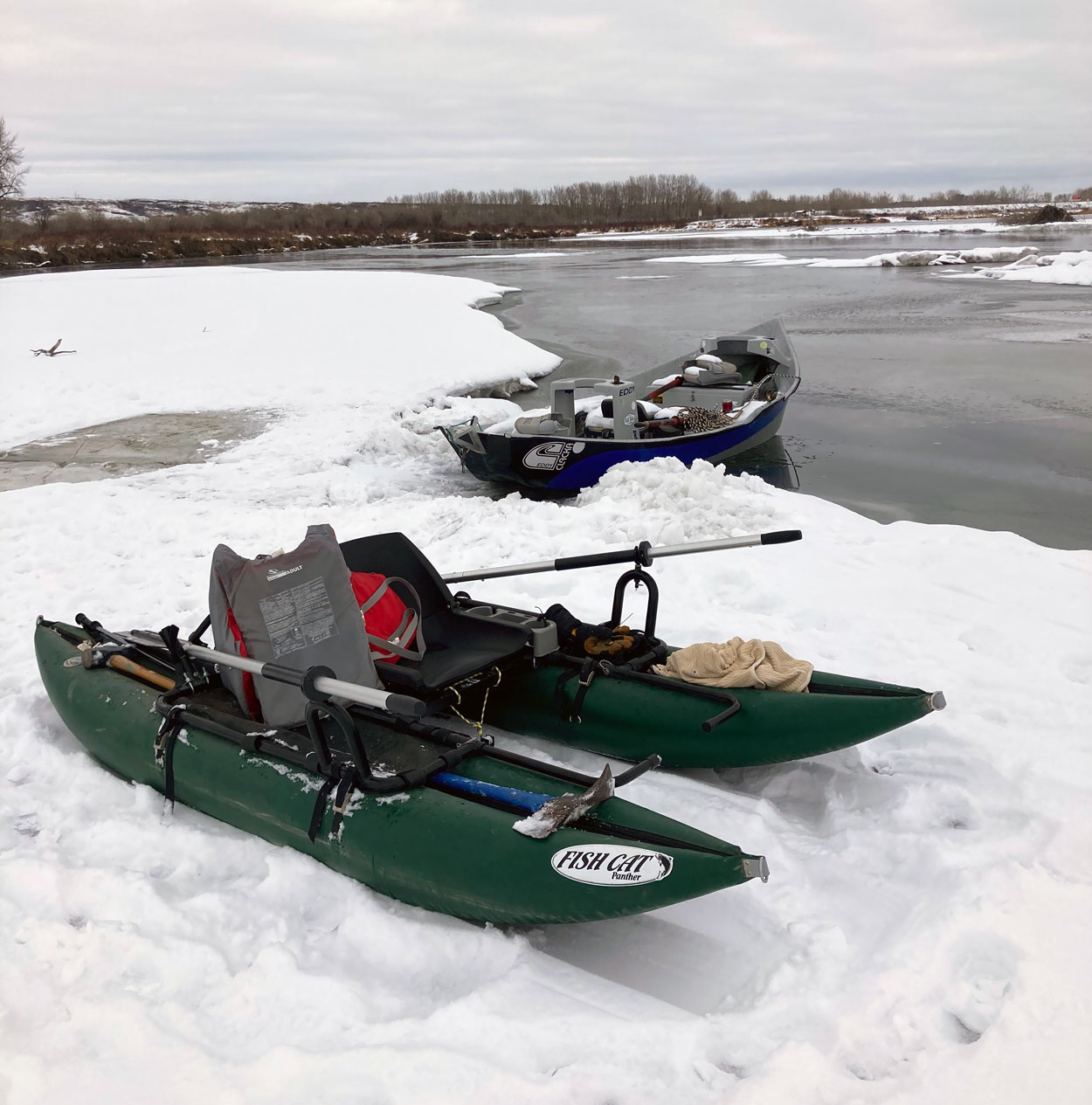
winter fishing float bow river drift boat in ice.

Lesson 4

Wear your life vest.

I’ve lost track of time here but at some point I see headlights headed down the launch access road. My cell phone has been dead for a while, so I’m hoping Tara, my wife, has called my oldest and best friend and fellow fly fishing guide, Kevin. We’ve been friends since our elementary school days and there’s no one I trust more. Damn we’ve been through a lot and spent some great times together! Tara called Kevin at 6:02pm she tells me later. Thankfully, the headlights belong to Kevin’s truck. I see the truck stop at the launch and I call out. No answer. At this point I’m not sure if it’s him. What I don’t know, is Kevin has called my wife and is letting her know my truck and boat trailer are at the launch, but I am not. Kevin says he arrived at the launch around 7:30 pm. He hangs up with my wife and calls out my name, I answer back and we establish he needs to stay put and I’ll work on chipping ice and making my way closer to the launch. He can’t see me, but he knows the river well and from my voice, he knows where I am.

Lesson 5

A working flash light. A total fail for me here. The batteries were corroded and my light didn’t work. My headlamp with fresh batteries on board is sitting on the kitchen counter at home.

Spirits are renewed, but the reality is, I’m not getting out of here without some help. Darkness, Cold, Ice and Water need to be respected and this is no place to be stubborn. Thankfully my wonderful wife decides, unknown to me, this is now an emergency and instructs Kevin, with his agreement to call 911. Kevin yells an apology and the call goes out. The apology I think because he knows I’m stubborn as hell and still think I could get out of this.

Fire, Police and Paramedics are all dispatched. The boat launch is lit up from emergency vehicle lights.  Communication is established by yelling back and forth until the fire truck turns on the PA and they talk to me occasionally, checking on me, along with letting me know they’re working on getting me off my little island. Eventually it’s decided a helicopter will be needed to lift me out.  Hawcs agrees, thankfully, to help and after a little search light work, they find me. Impressively landing on a postage stamp size dirt slab the Calgary Police welcome me into a warm chopper cabin and lift me the short distance to the Carseland Fire Station. The boat and all my gear are left behind.  I’ve had no sense of time being out here, but it’s been 10 hours since the call to Tara letting her know I might have a little trouble getting home. I only realize the timeline after the helicopter ride when I see the clock in Kevin’s truck. It’s 2am. I was certain it was around 9pm at the latest!

Thank You, First Responders!

I cannot express my gratitude properly to the first responders, Kevin and Tara. Having the lights simply visible and the communication while they formulated the rescue plan was invaluable. Had I been alone, with no communication or sense I could get out of there, I know my mind would have gone to some dark places. Thankfully, I remained warm, comfortable and calm during the whole experience, other than a brief, ear splitting swearfest. I am only embarrassed. This could have gone very differently and had a tragic ending as the first responders pointed out. I will add here that I did have the means to start a fire, but I was pretty comfortable at -10c with very little wind. Had it been any colder, I would have scrounged up some dead wood and started the fire. This also would have made it far easier for the helicopter to find me. For some reason I didn’t show up on the thermal camera, so maybe I was colder than I thought.

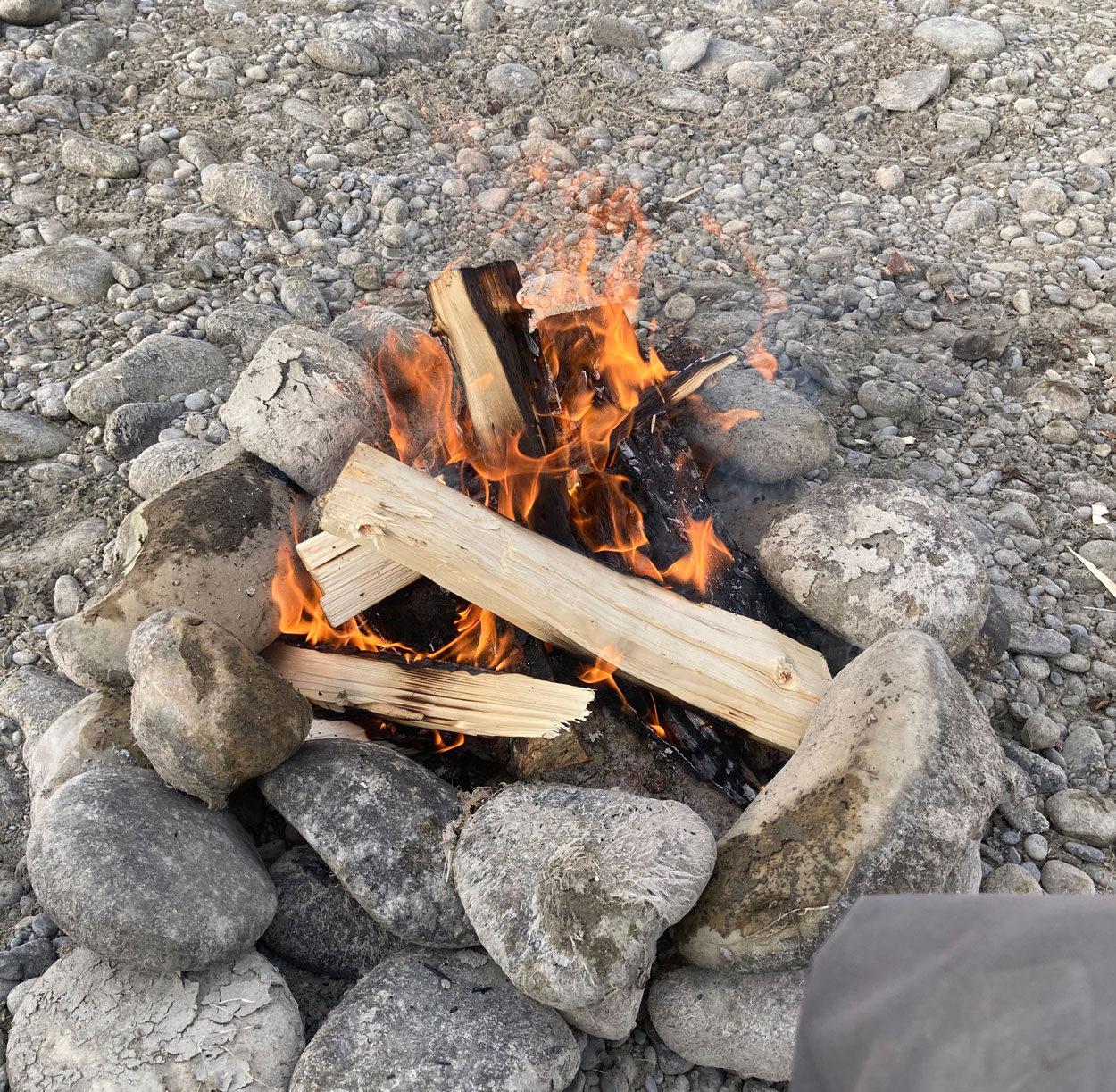
winter fishing float bow river firepit on shore to keep warm.

Winter Fishing Safety Kit

I have already added items to my emergency kit. If you search winter survival, or winter safety kit, or boat safety kit you’ll find all kinds of information regarding what you should have on hand. Be prepared, in fact be over prepared if you have room. Here’s a link to one of the blogs I found helpful. https://mrmountainman.ca/blog/build-your-emergency-kit  I have most of these items, but they didn’t do me any good in the garage while I was stuck on the ice! Don’t make my mistakes and please be prepared anytime you head out to wet that line.

winter fishing float bow river drift boat recovery using pontoon.

Drift Boat Recovery

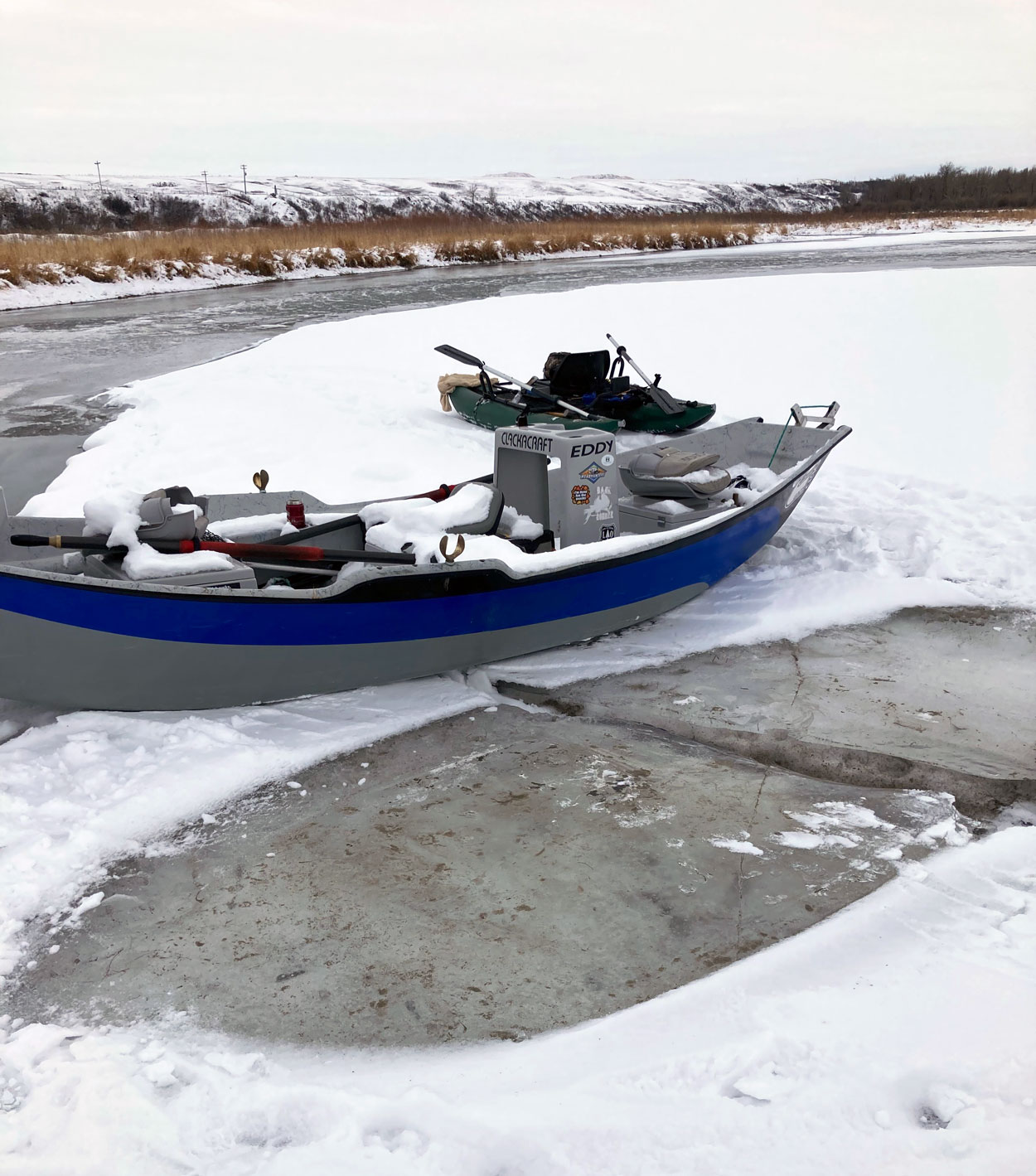
The channels opened up again briefly with some passage to the boat launch several days later. Kevin and I scoped out a route from the east bank. We dragged my single man pontoon boat up the ice, above the drift boat. I crossed open water to the island. The boat was resting in the next channel where I left her, bottom frozen to the ice. It took a couple of hours to man handle her to open water. Once she was floating, I threw the pontoon across her stern and we floated to the take out. Kevin had made his way on shore back to the boat launch and chipped a perfectly sized opening, with the trailer already backed in. The “Mad Drifter” is now safely in the garage unharmed. I retrieved all my gear and only one rod tip was sacrificed.

Thank you again to Tara, Kevin and the First Responders for getting my ass off the river that night! This river rat is forever grateful, thankful and learned his lesson.

Bow River Boot Camp

shoreline trout fishing on bow river near calgary, alberta, canada

A Fly Fishing Boot Camp Perfect for Beginners

You’ve been thinking about getting into fly fishing? Jump in with both feet! Well, maybe don’t jump. You’ll spook the fish, and the rocks might be slippery. Better to wade in quietly like a ghost, but excited. Get started with our fly fishing Boot Camp on the Bow River!

This is a lot of fun! We’re going to have plenty of laughs while learning and practicing new skills. This is fishing! For most of us it’s a relaxing pastime and a lifelong learning opportunity. Enjoy the process, make mistakes, and laugh at yourself! Most guests tell us, they’re completely focused and immersed in the experience and life takes a break while they’re on the river.  This is a good thing! It’s okay to check out once in while.

The Bow River Boot Camp combines outdoor classroom learning with actual fishing experience. This isn’t really that intense, but “boot camp” sounded right. No one is going to yell at you, and you probably won’t sweat too much.

DAY ONE

Hanging out in our outdoor classroom, dressed like we know what we’re doing, we’ll get into everything you’ll need to get you started and make you dangerous!

Your classroom is 6 acres of waterfront along our home waters on the Bow River just outside of the Calgary City Limits. We’ve set up your adventure at our ranch located on a beautiful stretch of water and provide everything you need to explore for the day. We include all the equipment, but you’re encouraged to bring your own gear if you have it.

trout fishing on bow river using a drift boat and casting for trout

DAY TWO

We load up the drift boat and fish one of our favourite stretches of the Bow River. You’ll have the opportunity to battle with hard fighting Rainbow and Brown Trout with your new skills.

That all sounds great right? What exactly are you getting yourself into?

Here is the course outline with some added detail. Try to contain your excitement!

fly fishing hook

Day One Itinerary

Gear Identification: Fly Rods come in different sizes for different applications. We’ll talk about a balanced set up for your needs. Fly Rod outfits are identified in “weights” which refers to the overall strength or size of the rod. We’ll show you how to put it all together.

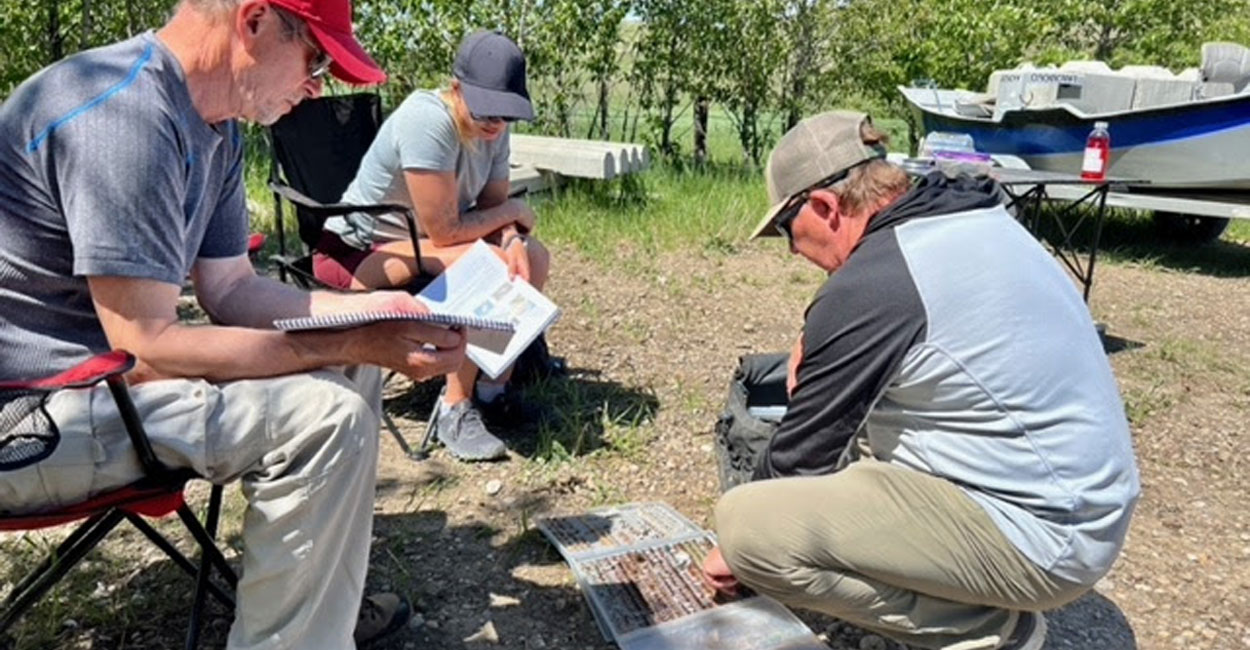
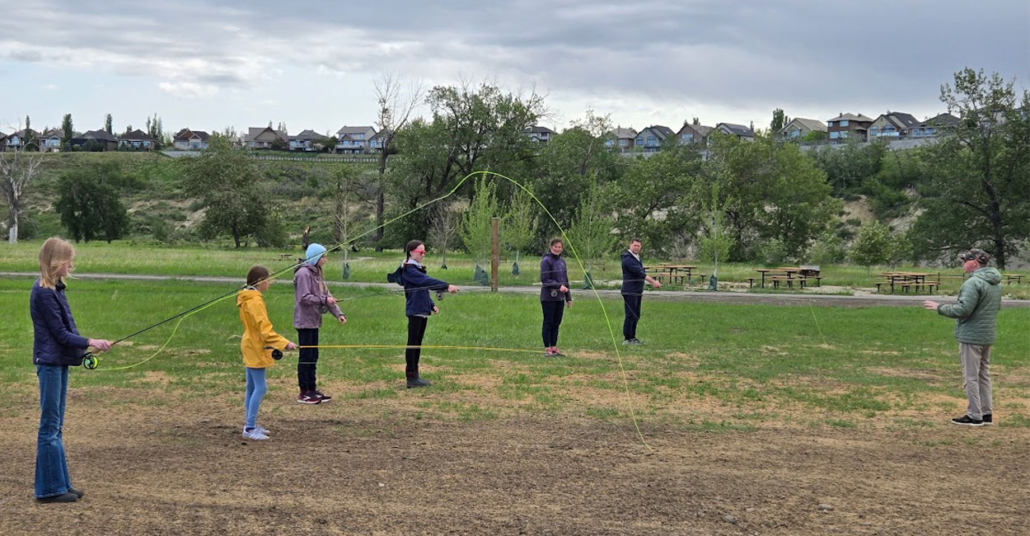
Casting: We’ll teach, and you’ll practice the four principles of fly casting. We start in the field adjacent to the river, and then head to the water, where you’ll get the real deal experience. Repetition of good habits is the goal here. The good news is physics can help us. The bad news is physics can help us.

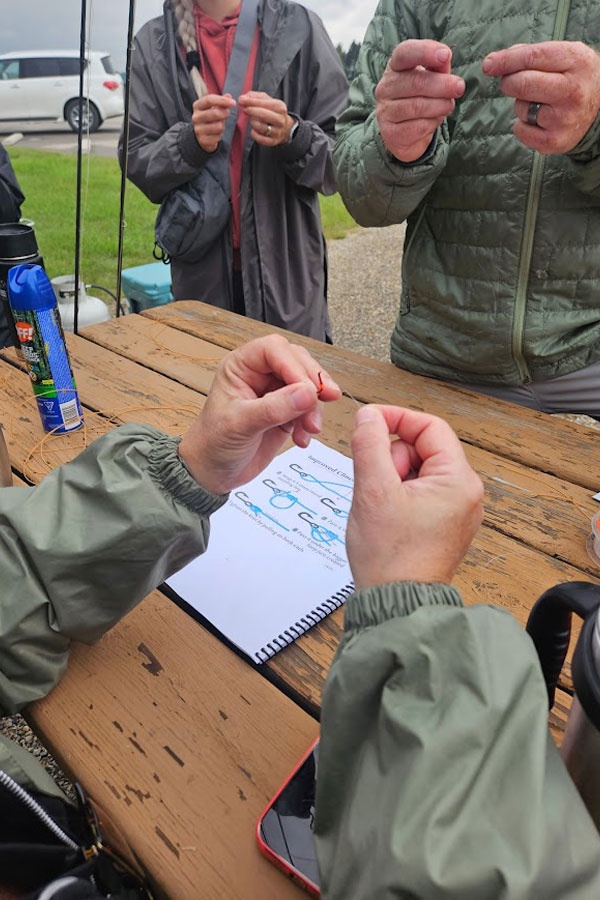
Knots: You’re need to know how to tie good, strong knots. Knot an option. (sorry) This is typically very light line, so the knots are critical. If you’re going to fly fish, you need to know how to tie two pieces of line together and you need to tie your line to the flies. There are so many knots and debates on which work best but we teach the IMPROVED CLINCH KNOT, NON-SLIP LOOP KNOT and the TRIPLE SURGEONS knot. Being on the river daily, these knots do the job. You’ll want to practice knots away from the water to become proficient. I guess you don’t have to but standing on the riverbank for 30 minutes trying to tie your fly on might dampen your spirits a little while your buddies are casting to happy fish!

Rigging: Now that you have your knots dialed in, what the heck are you supposed to do with them? We’ll teach you some techniques for rigging single and multiple fly applications and when to use them. You’ll use those knots to tie these rigs: Dry Fly. Dry Dropper. Deep Nymph Rig. Drop Shot. Streamer. On day two, you’ll fish all these rigs.

Bugs N’Flies: It would be kind of helpful to know what, exactly, to tie onto our rigs wouldn’t it? We’ll give you a down and dirty entomology overview to learn the difference between Mayflies, Caddis Flies, Stone Flies, Terrestrials, Annelids etc.

Reading Water: Now you need to find the fish. The river gives you clues to where stealthy trout like to be. Trout want a steady supply of food, they don’t like to use too much energy to eat, and they need cover or protection close by. Throwing your line where the fish are is the difference between hunting and hoping. Let’s hunt!

River Etiquette and Safety: Sharing our resources and being responsible is a must while you’re out there. A few Dos and Don’ts will help you enjoy your days on the water.

fishing guide alberta with drift boat near calgary

Day Two Itinerary

Let’s work on putting it all together and go fishin’! We’ll pack a semi-healthy lunch, and head out for the day. We’re fishing a great stretch of river, with plenty of trout, amazing scenery and we get to keep learning! Our goal is to get you more and more comfortable as the day progresses. Landing trout is part of the agenda today while your cast and presentation steadily get better. We cover approximately 15k of trouty river where you’ll fish from the drift boat with plenty of stops along the way to wade fish.

releasing trout while fishing on bow river with drift boat

Check out our website, stalk around our social pages and see if we’re a good fit for your next adventure. Please get in touch directly with questions etc. We love talking about this stuff and our spouses won’t listen anymore.  Explore videos, different guide sites, visit fly shops, and you’ll soon find a pretty cool group of people of all age groups and walks of life enjoying our sport. You’ll also realize quickly there is no substitute for being out there!